
Honeywell Air Duct Cleaning in Ogden: A Homeowner’s Guide
Installing a Honeywell whole-home air purifier into a contaminated duct system is like putting a water filter on a pipe full of sediment. The upstream problem limits what the downstream equipment can accomplish, no matter how good that equipment is. Before you spend money on premium filtration hardware, it’s worth understanding how your ducts and your Honeywell system actually work together. Here’s what we’ve learned cleaning both in Ogden homes. And if you’d rather not DIY your way through a duct inspection, call (844) 564-2864.
Why duct cleanliness decides how well your Honeywell system performs
Honeywell air quality equipment is designed to condition air that’s already reasonably clean. The media filter, the electronic air cleaner, and the UV purifier all assume they’re working on air that’s been through a duct system in decent shape. When the ducts are loaded with dust, pet hair, construction debris, and settled particulates, that equipment is fighting a losing battle from the first minute it runs.
Think about what actually happens inside a dirty duct in an Ogden home. Air moving through the system picks up loose debris from the duct walls and carries it straight into your Honeywell filter. The filter loads up faster than it should, which means you’re replacing media or washing cells more often than the label suggests. The UV lamp still runs, but it’s treating air that’s already carrying a heavier particulate load. Every component downstream works harder and performs worse.
The same principle applies to the supply side. Debris that settles on duct surfaces gets re-entrained every time the blower kicks on, especially in older Ogden housing where flex duct runs and sheet metal transitions trap material at every joint. A clean duct system lets the Honeywell hardware do what it was engineered to do: filter, purify, and move air without fighting upstream contamination.
None of this means Honeywell equipment is the problem. It means the duct system is the variable most homeowners never think about. The whole point of professional air duct cleaning is to reset the system so the hardware downstream has a clean starting point. If you’ve already invested in filtration, cleaning the ducts is the step that protects that investment.
How Honeywell’s media filters, electronic air cleaners, and UV systems each interact with duct contamination
Different Honeywell components respond to dirty ducts in different ways, and the differences matter when you’re deciding what to fix first. Here’s how each one behaves.
- Media filters are the most sensitive to duct contamination. These are the thick, pleated filters that replace your standard 1-inch filter, and they’re designed to capture fine particles without strangling airflow. In a dirty duct system, they load up faster because they’re catching material a clean system would have kept in the ducts. A media filter that’s due for replacement way before the recommended interval is a signal worth paying attention to.
- Electronic air cleaners use charged collection cells to trap particles. Contamination in the ducts doesn’t just burden these cells; it also means the pre-filter upstream of the cells is catching more, and the cells themselves need cleaning more often. You’ll notice the difference as increased maintenance and reduced capture efficiency over time.
- UV purification systems are the least burdened by particulate contamination but the most affected by what’s growing on duct surfaces. UV lamps treat air passing them and, in some installations, the coil and drain pan area. If the ducts upstream are harboring mold or microbial growth, the lamp is doing its job on air that’s already carrying spores from farther back. Mechanical cleaning plus a sanitizing treatment addresses the growth at the source.
Ogden’s dry climate and seasonal temperature swings mean ducts here tend to accumulate a lot of fine dust, and homes that run evaporative cooling alongside forced air can pick up additional mineral and particulate buildup. That combination is hard on any filtration system, Honeywell included.
Why duct cleaning should come before installing a new Honeywell filtration system
Installing a Honeywell media filter or UV system on top of a dirty duct system stacks the odds against the new equipment. The hardware starts performing below spec from day one, and you never get an accurate baseline for how it should work.
Here’s the sequence that actually makes sense in an Ogden home:
- Inspect the duct system first. A camera inspection shows what’s actually in the ducts, where it’s accumulating, and whether there’s damage, gaps, or disconnected runs that need sealing before anything else happens.
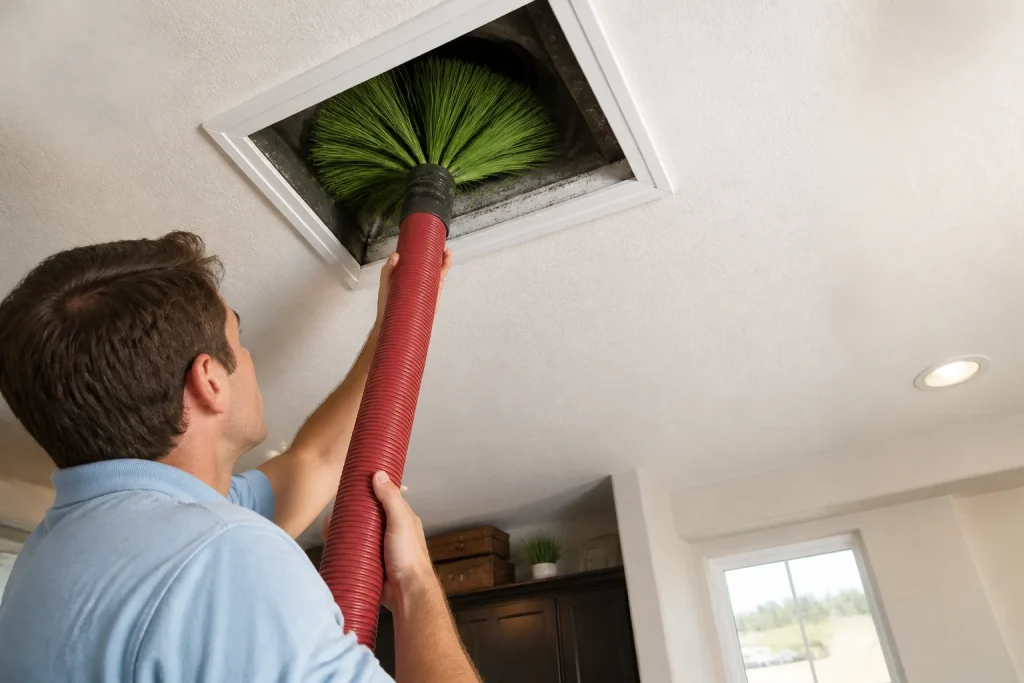
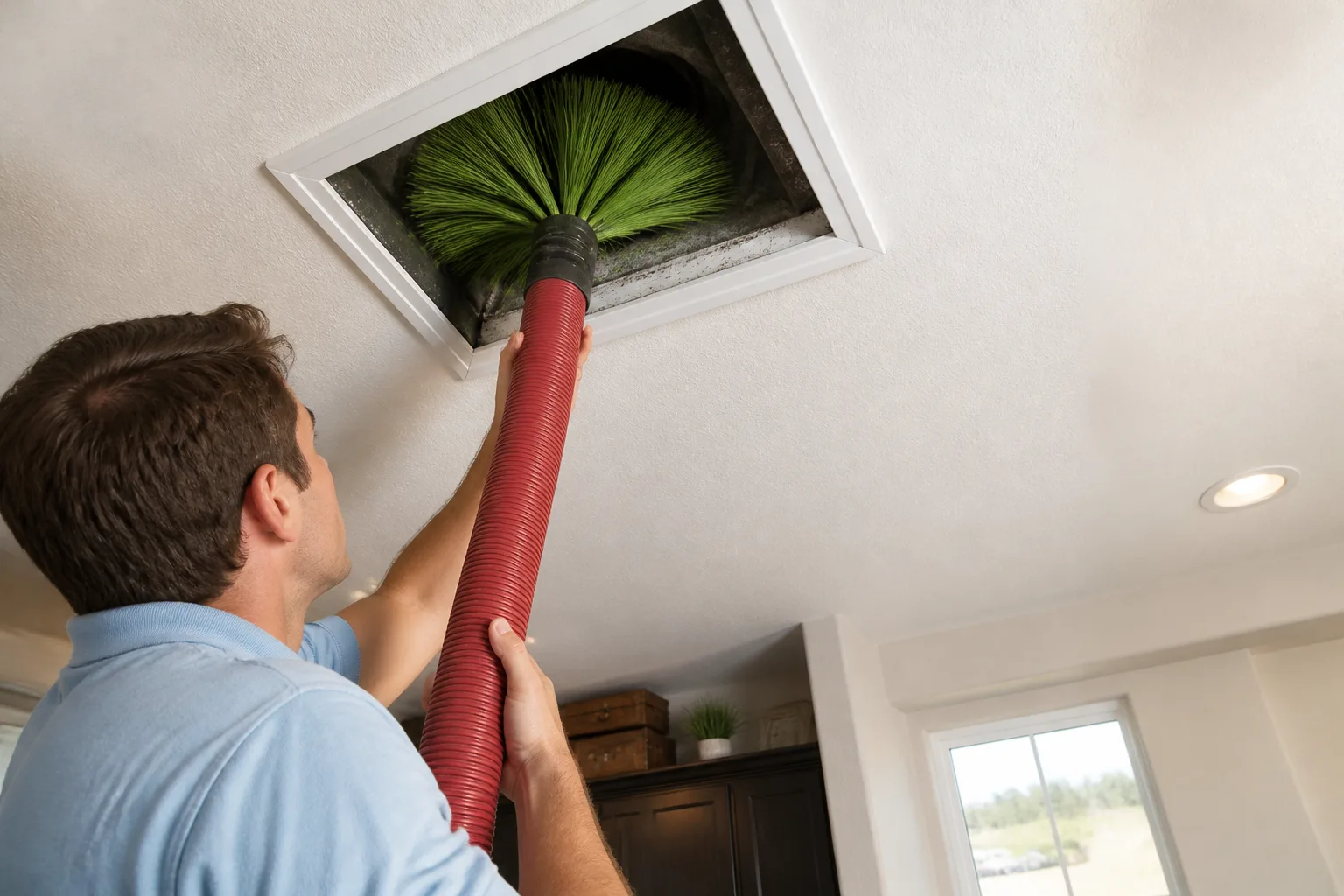
- Clean and seal the ducts mechanically. Rotary-brush agitation and HEPA extraction remove the debris load. Sealing gaps in the ductwork keeps treated air where it belongs and stops new contamination from entering at every joint.
- Install the Honeywell hardware on a clean system. Now the new filter, purifier, or UV system starts from a known baseline. You get real performance data, and future filter loading rates actually mean something.
- Establish a maintenance schedule based on clean-duct performance. How fast filters load and how often cells need cleaning will tell you what your specific system needs going forward.
Skip the cleaning step and you’re installing premium equipment into a system that won’t let it perform. The order matters more than most homeowners realize, and it’s the single biggest reason we recommend cleaning before hardware upgrades in Ogden rather than the other way around.
Honeywell components to protect during mechanical duct cleaning
Mechanical cleaning means rotary-brush agitation and high-volume HEPA extraction. Done right, it’s a careful process. Done carelessly, it can damage the exact equipment you’re trying to protect. Before any mechanical cleaning starts, certain Honeywell components need to be removed or protected.
- Electronic air cleaner cells and pre-filters should come out before brush agitation begins. Loose debris and agitation can damage collection cells and clog pre-filters beyond cleaning.
- Media filter cartridges come out too. There’s no reason to expose a new or partially used media filter to the dust load you’re removing.
- UV lamps and ballasts should be powered down and the lamps protected or removed depending on the installation. Lamps are fragile, and the housing shouldn’t be exposed to brush contact.
- Humidifier components tied into the duct system, like Aprilaire units, should be isolated or bypassed so they don’t collect debris during cleaning.
This is also where professional containment matters. Using Abatement Technologies negative-air equipment keeps the dust you’re dislodging inside the cleaning zone instead of blowing it back through the living space. When we clean in Ogden, that containment protocol is part of the job, not an optional extra. A cleaning that redistributes dust into your home is worse than no cleaning at all, and it’s the opposite of what your Honeywell system needs. Rotobrush rotary-brush systems paired with Nikro HEPA vacuum equipment are what let us agitate debris loose and trap it on the way out.
How to read Honeywell filter loading rate as a duct cleanliness signal
Your Honeywell filter is one of the most useful diagnostic tools in your home, and most homeowners never think of it that way. How fast it loads tells you something about what’s upstream of it.
A media filter that’s visibly loaded in a fraction of its rated interval is telling you the duct system is delivering more particulate than it should. A new filter that looks gray in a few weeks rather than a few months is a faster-than-normal loading rate, and that’s a sign of upstream contamination: loose debris on duct surfaces, dust entering through gaps and unsealed joints, or a duct system that hasn’t been cleaned in years.
You can track this yourself. Note the date you install a fresh Honeywell filter. Check it at the recommended inspection interval and again at the replacement interval. If it’s heavily loaded at inspection, that’s your signal. If a filter that used to last a full interval is now loading in half the time, the duct system is the likely cause and it’s worth having it inspected.
Ogden homes with forced-air systems that also run evaporative cooling sometimes see faster loading rates because of mineral dust pulled in through the cooling side. That’s a local factor worth knowing, and it’s one more reason bathroom vent, kitchen vent, and return duct condition all matter alongside the main trunk line.
What maintenance interval makes sense for a Honeywell-equipped Ogden home?
Homes with Honeywell whole-home filtration typically benefit from a different maintenance rhythm than homes running standard 1-inch filters. The hardware does more, so it’s worth protecting properly. But the right interval depends on your system, your household, and how the ducts are holding up.
Standard 1-inch filters are usually swapped on a manufacturer-recommended schedule, and ductwork often goes uninspected for years because there’s no filtration investment on the line. Once you’ve installed Honeywell media filtration, electronic air cleaning, or UV purification, the math changes. That equipment works best when the duct system behind it is clean, which is why a professional duct inspection every few years is a reasonable baseline for a Honeywell-equipped home in Ogden. If you have pets, do a lot of remodeling, or live in an older home with original ductwork, inspection more often makes sense.
Beyond inspection, your Honeywell components themselves need attention on their own schedules: media filter replacement, electronic cell cleaning, UV lamp replacement. The filter loading rate and the appearance of the cells between cleanings will tell you whether the system is under more strain than it should be. When loading rates start climbing, that’s the cue to inspect the ducts rather than just replace another filter.
Combining HVAC cleaning with duct maintenance also helps, since the coil and blower are part of the same air pathway and a clean coil reduces the load the filtration system has to handle.
When to call a pro
If you’re comfortable swapping filters and noting loading rates, you’ve got the basics covered. Call a professional when the signal points upstream: a filter loading far faster than it should, visible dust or debris at supply registers, musty odors that don’t clear, uneven airflow between rooms, or a duct system you can’t remember ever being inspected. Brush-and-HEPA cleaning with proper containment is not a homeowner task, and mechanical cleaning done without containment can spread the very debris you’re trying to remove. Our technicians use Rotobrush and Nikro equipment alongside Abatement Technologies containment, and we handle dryer vent cleaning on the same visit if your vent needs it.
Related services in Ogden: air duct cleaning for the full mechanical clean, HVAC cleaning for the coil and blower side, and air quality & sanitizing for post-clean microbial treatment.
The Bottom Line
Honeywell equipment is only as good as the duct system it’s installed into. Cleaning the ducts before installing new filtration gives you an honest baseline and protects the hardware; cleaning them after the fact means the equipment never got to perform at spec. Read your filter loading rates, inspect the ducts before you upgrade, and protect the Honeywell components during any mechanical cleaning. That’s the sequence that makes the whole system work.
We clean the entire air pathway in Ogden, not just the vents you can see, using Rotobrush agitation, Nikro HEPA extraction, and Abatement Technologies containment so contaminants come out rather than get redistributed. Our technicians have up to 15 years of experience, and Guardsman sanitizing treatments are available after mechanical cleaning for microbial concerns. If you’re in Ogden and need help, Ogden Air Duct Cleaning Pros offers free estimates – call (844) 564-2864. We answer 24/7. Fast dispatch from 7am to 7pm, Sunday through Friday.
Frequently Asked Questions
Yes, it does. Honeywell whole-home equipment has components that need to be removed or protected before mechanical duct cleaning begins, including media filter cartridges, electronic air cleaner cells and pre-filters, and UV lamps. Cleaning without removing those parts can damage them or clog them beyond cleaning. Any professional cleaning should account for the specific Honeywell hardware in your system before brush agitation starts. If you’re not sure what your system has, call (844) 564-2864 and we’ll walk through it before booking.
A professional duct inspection every few years is a reasonable starting point for a Honeywell-equipped home in Ogden, and more often if you have pets, recent remodeling, or older ductwork. The more reliable signal is your filter loading rate: if it’s loading faster than normal, the ducts likely need attention sooner. Standard 1-inch filter homes can usually stretch longer between duct inspections, but that’s a lower bar, not a better one. Call (844) 564-2864 for a free estimate on an inspection.
No. A new Honeywell filter, purifier, or UV system cannot clean a contaminated duct system. It sits downstream of the contamination and will load faster, work harder, and underperform because of it. The right order is to clean and seal the ducts first, then install the Honeywell hardware on a clean system so you get accurate performance data from the start. If you’re about to install new equipment, call (844) 564-2864 first so the duct inspection happens before the hardware goes in.
The difference is in what the hardware is designed to do and how much duct condition matters. A standard 1-inch filter catches basic dust; Honeywell media filters, electronic air cleaners, and UV systems are engineered to capture finer particles and treat air more thoroughly, which means they’re far more sensitive to upstream duct contamination. A dirty duct system actively limits what Honeywell hardware can accomplish. Our technicians have up to 15 years of experience reading that interaction, and estimates are free – call (844) 564-2864.
Written by the team at Ogden Air Duct Cleaning Pros.
Need Air Duct Cleaning Help?
Call Ogden Air Duct Cleaning Pros - the local pro we connect you with is licensed and insured, with free written estimates in Ogden.
(844) 564-2864