
Last updated November 25, 2026
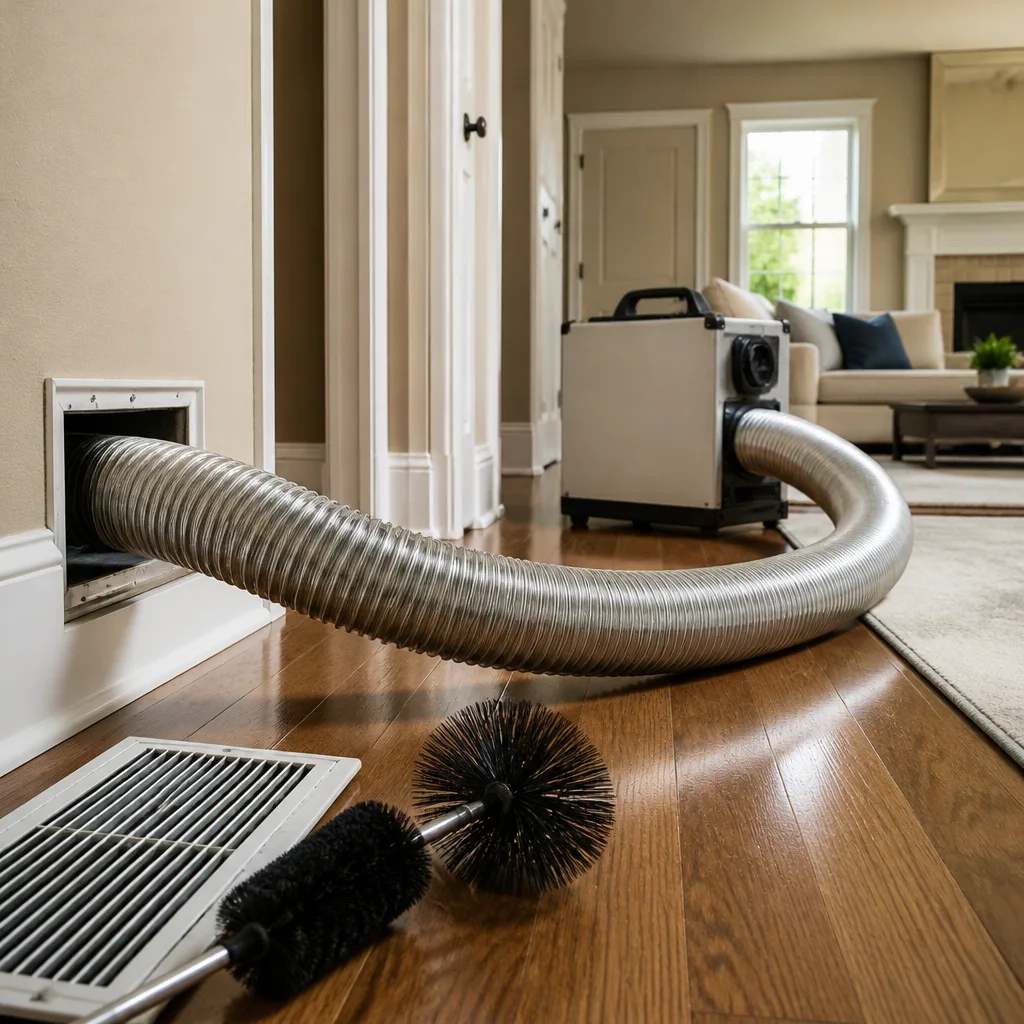 Whole-home duct cleaning
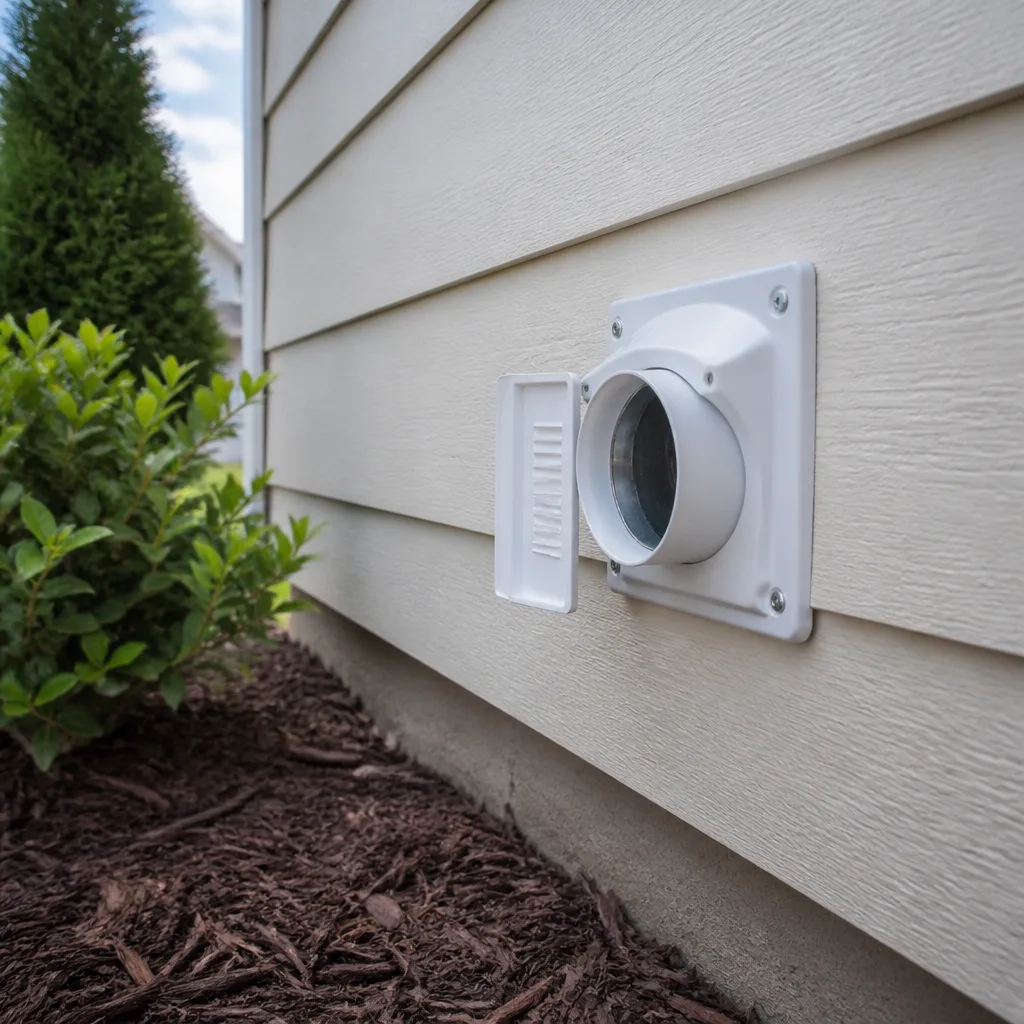 Dryer vent cleaning
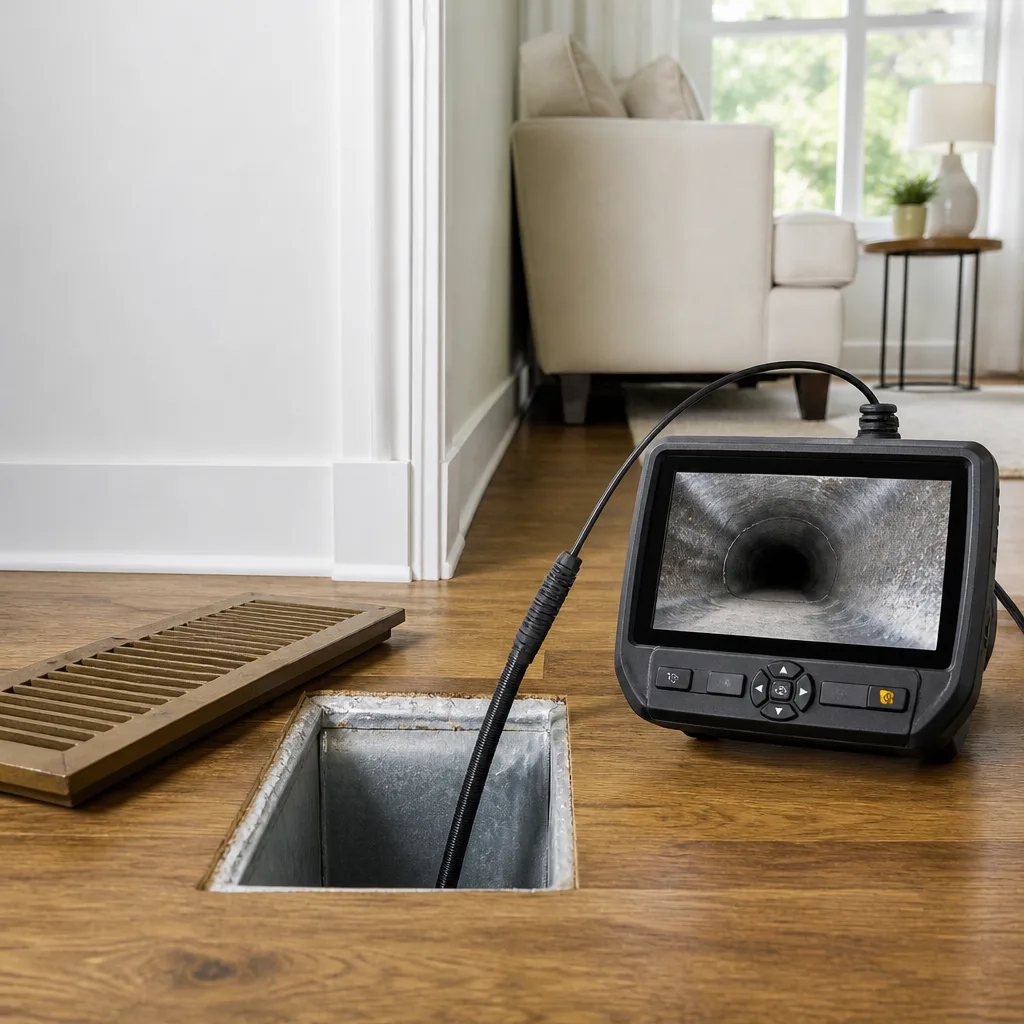 Camera inspection
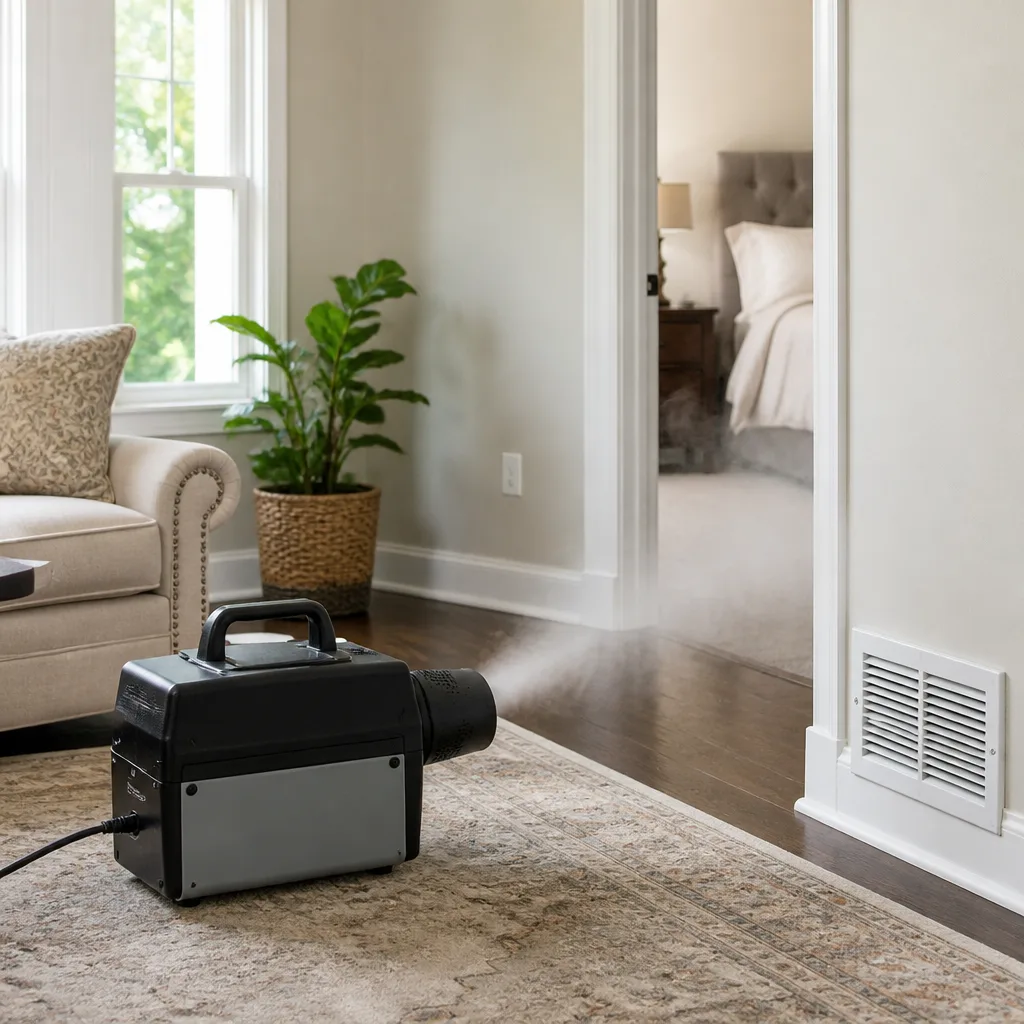 Sanitizing & deodorizing
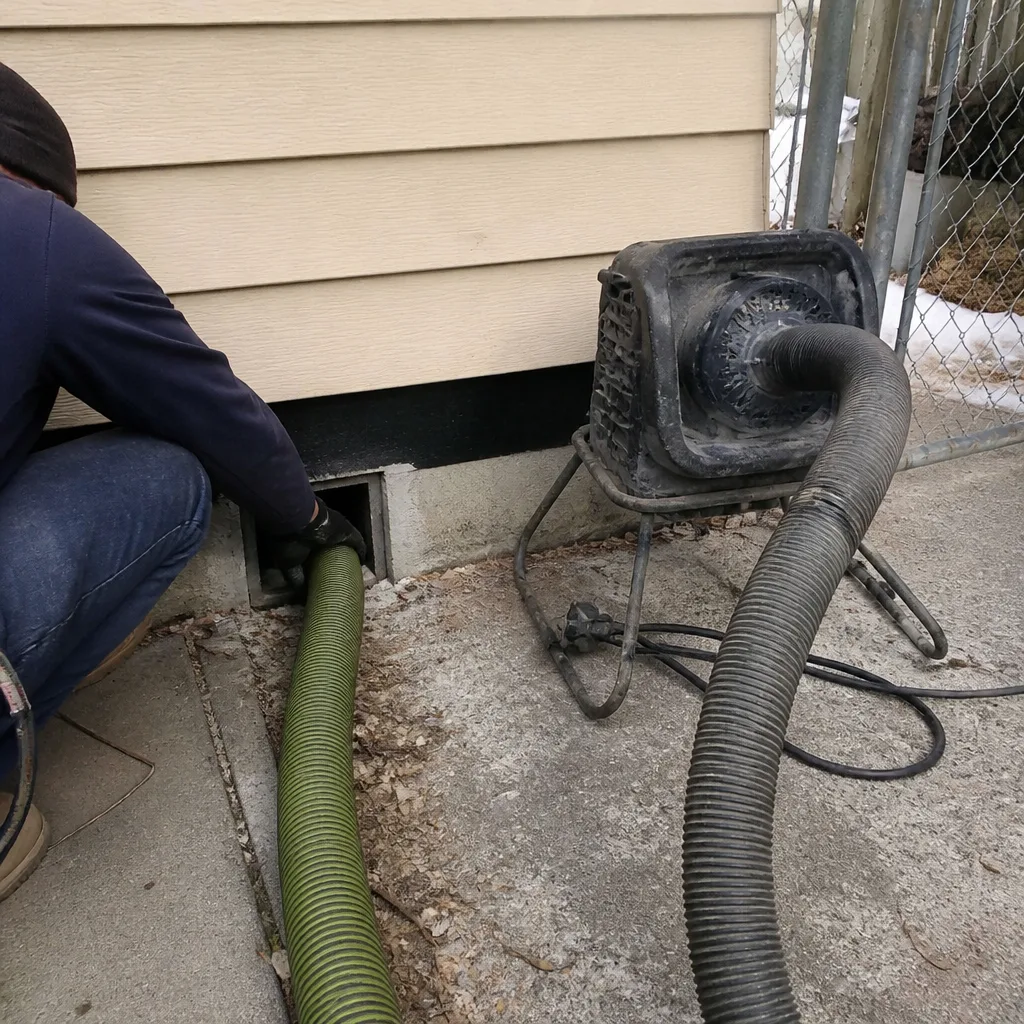
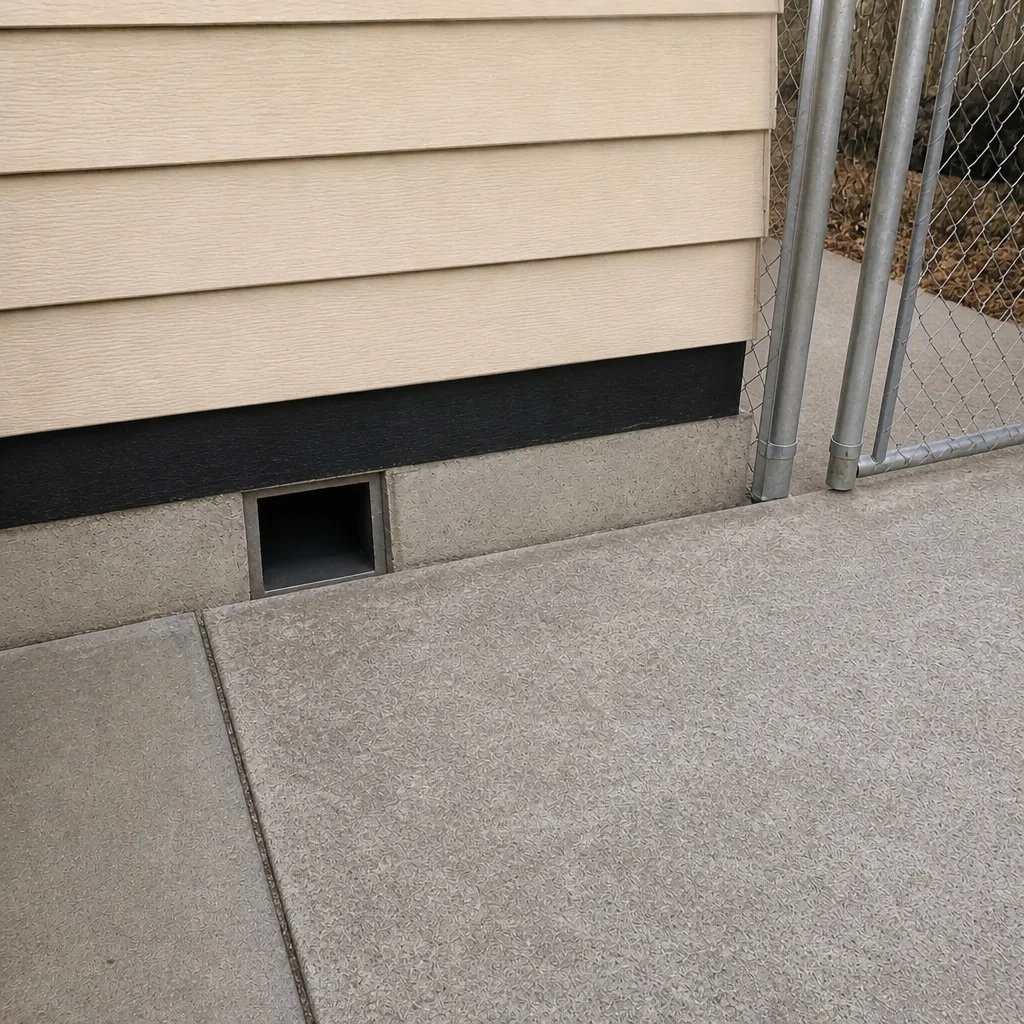
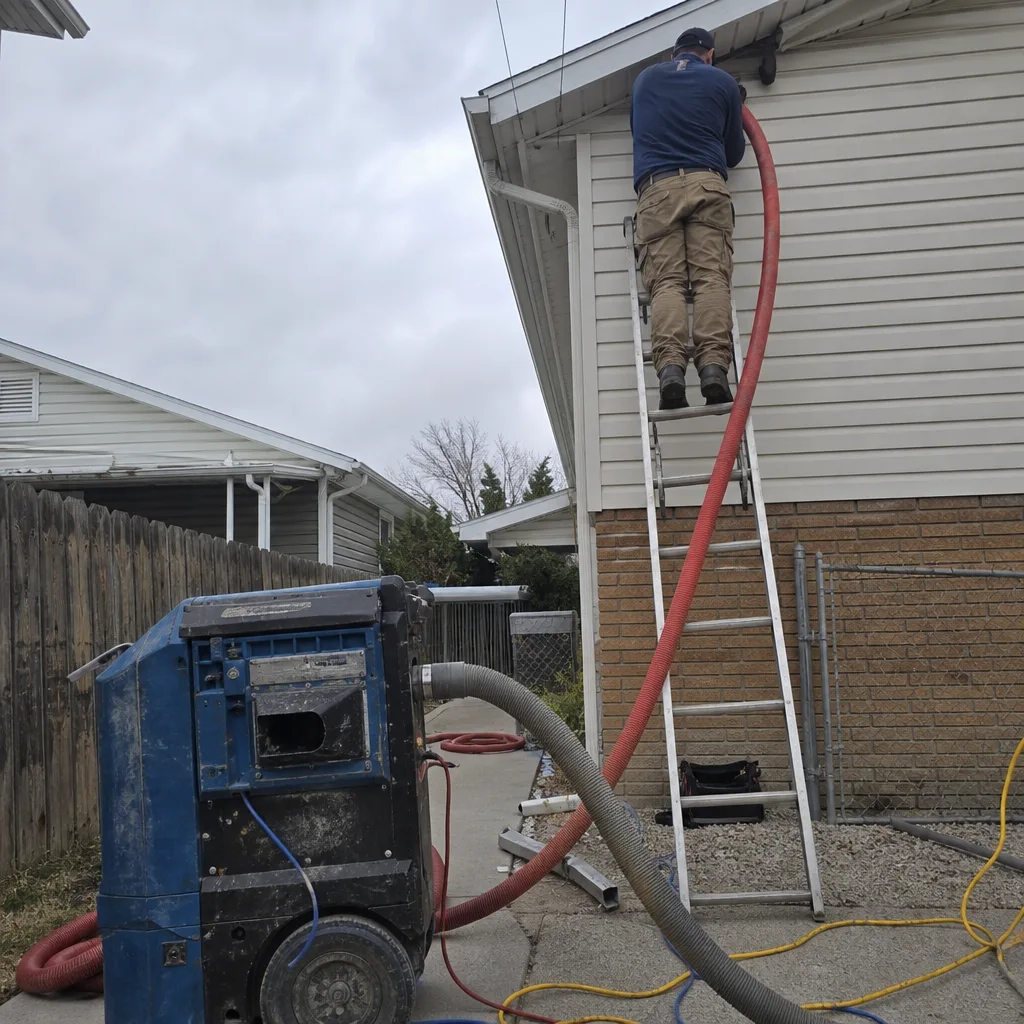
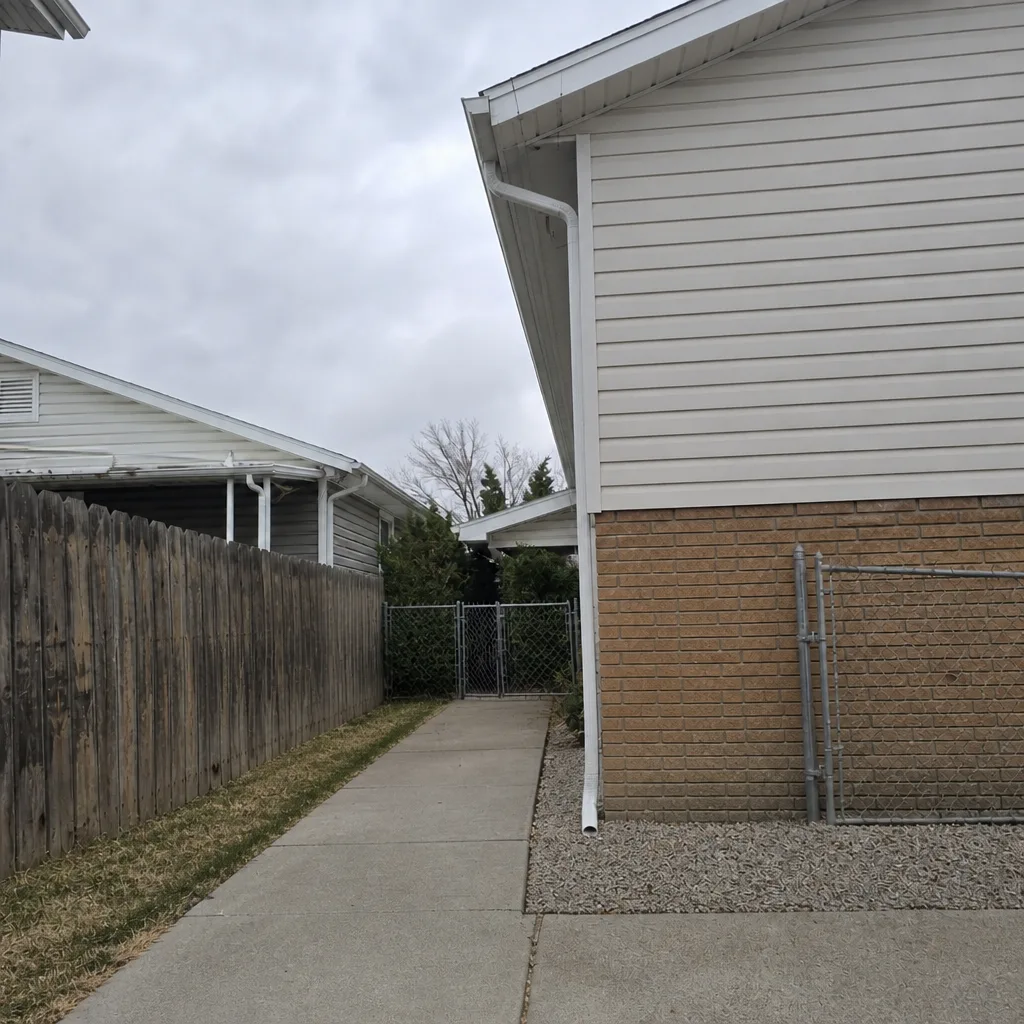
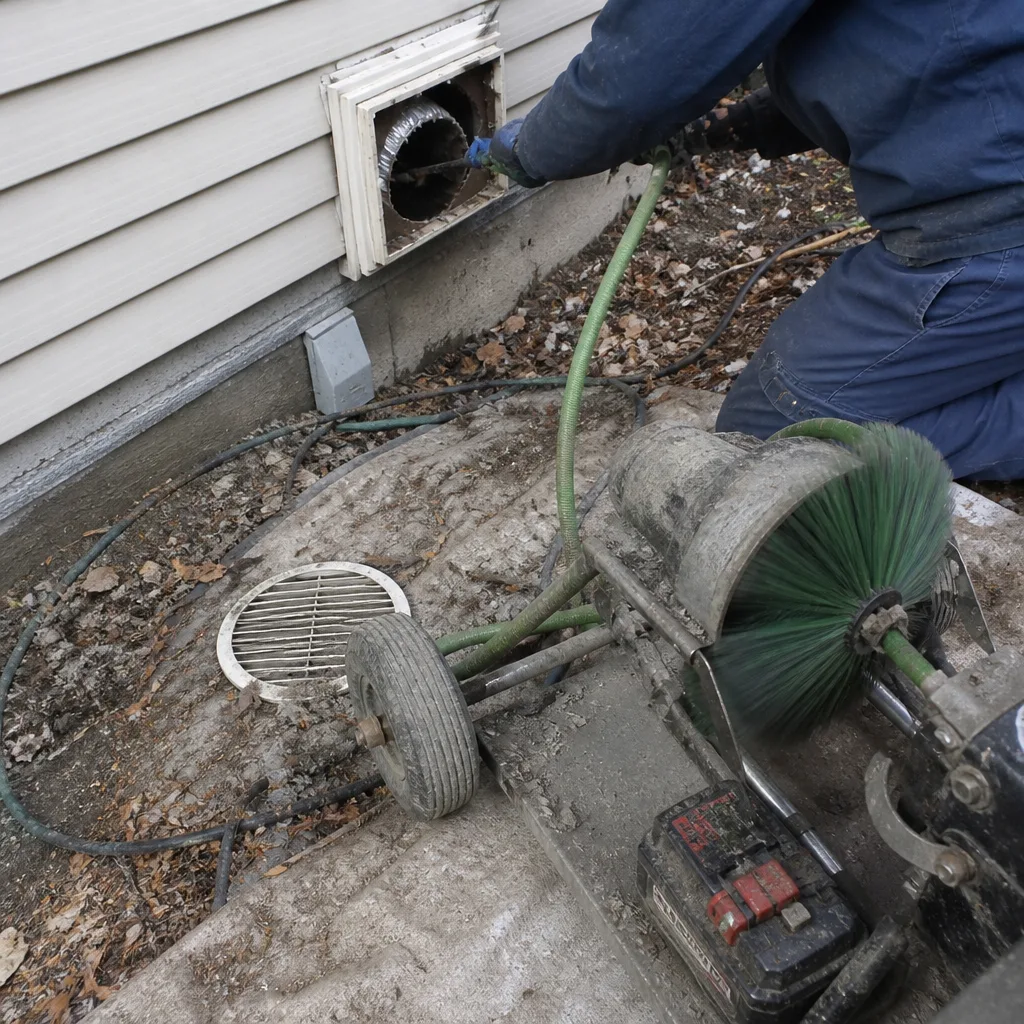
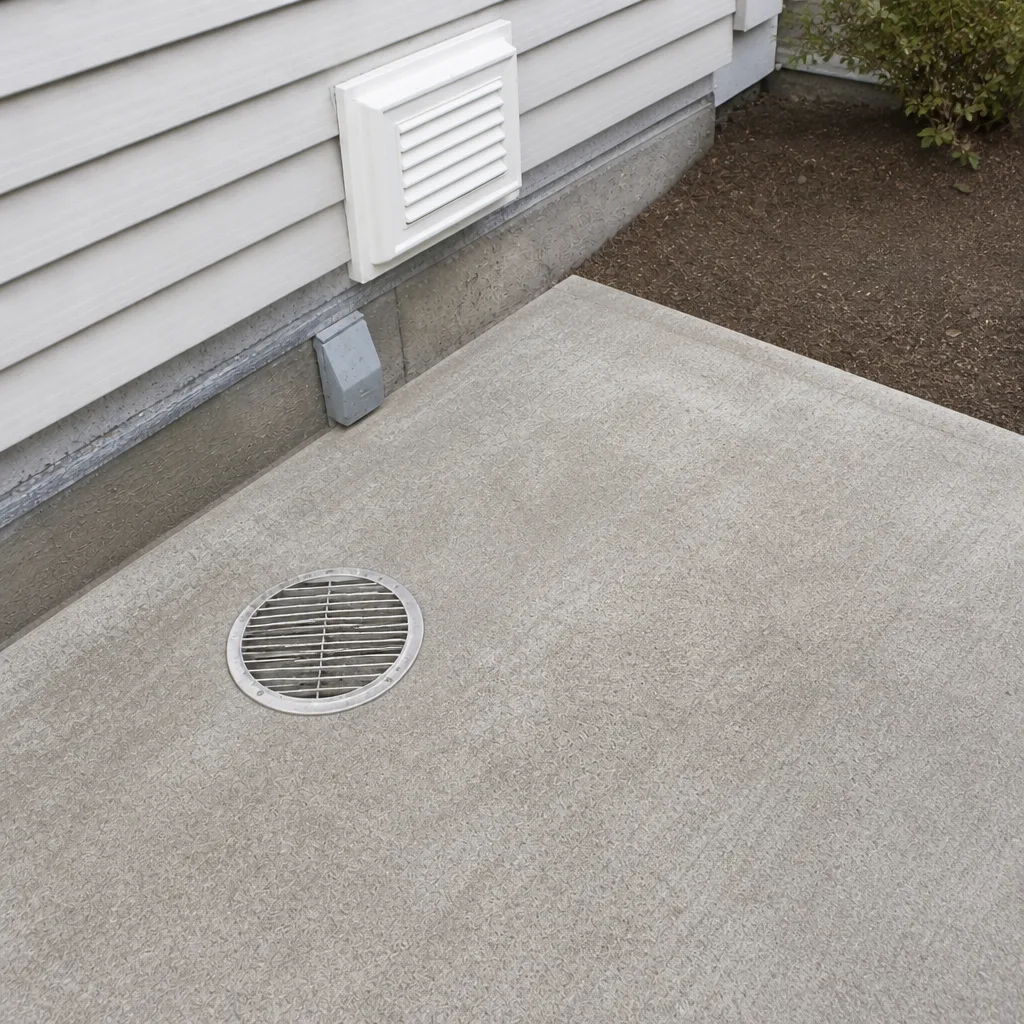
Whole-system duct and dryer vent check with before-and-after photos - you see exactly what came out of your vents
That "$99 whole-house special" is a bait ad - the real number appears once they are in your hallway, or the "clean" is a shop-vac at the register. We photograph the inside of your ducts before and after instead.
DIY vs Professional Air Duct Cleaning: The Ogden Homeowner’s Decision Guide
A $30 dryer vent brush kit can clear a lint-clogged vent line better than a lot of people expect, and wiping down the return grilles in your hallway is a chore you can handle on your own. Cleaning an entire HVAC system is a different question. The gap between what a homeowner can do and what a professional clean accomplishes isn’t about effort or willingness. It comes down to physics: consumer equipment rarely generates the airflow and static pressure needed to dislodge debris that has bonded to duct walls over years. This guide walks through what’s actually possible with DIY tools, where the limits show up, and how to decide what your Ogden home really needs.
Styles & brands we work with
- Whole-home duct cleaning
- Dryer vent cleaning
- Camera inspection
- Sanitizing & deodorizing
Quick Answer
DIY air duct cleaning works for surface-level maintenance like grille cleaning, dryer vent lint removal, and visual inspection with a flashlight and phone camera. It does not work for adhered particulate, mold, or debris dislodged by structural movement, because consumer vacuums lack the CFM and static pressure to extract material from duct walls. If your ducts show visible buildup, musty odors, or uneven airflow after a filtering check, professional cleaning is the right call.
Table of Contents
- Why Consumer Vacuums Fall Short: The CFM and Static Pressure Reality
- What You Can Legitimately Do Yourself
- When DIY Attempts Make the Problem Worse
- How to Inspect Your Own Ducts Before You Decide
- Ogden-Specific Factors: Earthquake Movement, Dry Air, and Older Housing
- What a Professional Clean Actually Involves
- DIY vs Professional: Time, Cost, and What You Get
- Common Mistakes to Avoid
- When to Call a Professional
- Frequently Asked Questions
- The Bottom Line
Why Consumer Vacuums Fall Short: The CFM and Static Pressure Reality
Air duct cleaning depends on two measurements: cubic feet per minute (CFM) and static pressure. CFM tells you how much air volume moves through the system. Static pressure tells you how hard that air pushes against resistance, which in a duct system means fighting the drag of rough walls, turns, and attached debris. A shop vac rated at 150 – 200 CFM sounds impressive until you realize it loses most of that pulling through twenty feet of duct with 90-degree elbows. Professional HEPA extraction units from Nikro and similar manufacturers are built for sustained high-static-pressure operation through long hose runs, typically pulling 400 – 500 CFM or more at the working end.
The static pressure distinction matters even more. Adhered particulate (dust mites, skin cells, pet dander, construction dust) bonds to duct walls through moisture cycles and airflow patterns. Dislodging it requires mechanical agitation first, then enough negative pressure to capture what breaks loose. That’s why professional cleaning uses rotary brush systems like Rotobrush to agitate duct walls while a separate HEPA vacuum holds negative pressure on the system. The two work together. A consumer vacuum brush attachment applies agitation without the capture capacity, which means debris goes airborne into the room instead of into the vacuum.
Here’s the comparison in plain numbers:
- Consumer shop vac: 150 – 200 peak CFM, drops sharply under hose load, no HEPA filtration on most models rated for wet/dry use
- Consumer vacuum + brush kit: adequate for a 10-foot dryer vent run, inadequate for a 20-duct HVAC system
- Professional truck-mount or portable HEPA unit: 400 – 500+ CFM sustained, HEPA-rated exhaust, negative-air capability when paired with containment equipment
- Rotary brush systems: motorized agitation that reaches full duct circumference, compatible with simultaneous vacuum extraction
That’s not marketing language. Those are the airflow numbers that make extraction possible versus aspiration that mostly stirs material. If your ducts contain only light surface dust, the difference is negligible. If they contain fifteen years of adhered buildup, it isn’t.
What You Can Legitimately Do Yourself
Plenty of duct maintenance falls comfortably within reach of a homeowner with basic tools. The important distinction is surface versus system. Anything at the register, at the dryer, or visible with a flashlight is fair game. Anything behind the duct wall needs equipment you probably don’t own.
Here’s what a homeowner can do without professional equipment:
- Remove and wash return grilles and supply registers. Pop the grille off, soak it in warm soapy water, scrub the louvers, dry fully, and reinstall. Grilles collect a surprising amount of surface dust and are the easiest single improvement to airflow you can make.
- Clear the dryer vent lint trap and exterior cap. After every load, empty the lint screen. Twice a year, disconnect the dryer from the wall and check the short flex run behind it. Outside, clear the exterior cap of lint and check that the flapper opens freely. Ogden area homes with short, straight vent runs respond well to this routine.
- Replace HVAC filters on schedule. A filter that’s clogged restricts airflow and pushes dust back into the system. This is the highest-return maintenance task in the whole air pathway.
- Vacuum visible dust inside accessible register boots. With the grille off, reach in with a crevice tool and lift loose dust from the boot walls. Stay shallow. Don’t push tools deep into flex duct.
- Inspect accessible flex duct visually. If you can see duct sections in the basement or attic, look for kinks, crushed runs, disconnected joints, or water staining. Note what you find for a later conversation.
None of this requires equipment beyond a shop vac, a brush, and a screwdriver. For dryer vent cleaning on a simple run, a brush kit genuinely works, and we’ll say so plainly. It’s the full HVAC system where the calculus changes. Our dryer vent cleaning service exists for the harder runs: long vent paths, multiple elbows, or lint packed tight enough that the brush kit won’t reach it.
When DIY Attempts Make the Problem Worse
There’s a category of duct problem where a homeowner attempt doesn’t just fall short. It actively spreads contamination into the living space. These are the situations where professional equipment and containment protocols matter most.
Disturbing mold colonies without negative pressure. If a flashlight inspection shows dark staining or fuzzy growth inside a duct, brushing it without sealed containment releases spores into the air stream. Mold spores are microscopic, and once airborne they settle on surfaces throughout the home. Professional cleaning uses containment barriers and Abatement Technologies negative-air equipment to hold the system under pressure while the work happens, so released spores get captured rather than recirculated. A shop vac without HEPA filtration just blows them into the room.
Brushing without suction. Any brush attachment on any consumer vacuum dislodges debris from duct walls. Without thorough extraction, that debris enters the airstream on the next HVAC cycle. In effect, the homeowner has converted a settled problem into an airborne one. This is especially true in older Ogden housing stock with galvanized steel ductwork, where debris has adhered over many heating seasons.
Attempting to clean beyond accessible ductwork. Feeding a brush or vacuum hose into a duct and pushing it deep can dislodge joints in flex duct, tear the inner liner, or leave debris lodged in an elbow. Flex duct is not designed for pulling tools through it. Neither is a run that transitions from rigid to flex behind a wall.
Cleaning after structural movement. We’ll cover this in the Ogden-specific section, but the short version: if the ducts may have shifted or been affected by structural movement, cleaning without inspection risks pushing insulation fragments further into the system.
How to Inspect Your Own Ducts Before You Decide
A DIY inspection answers one question: does my system actually need professional cleaning, or is it in reasonable shape? You don’t need special tools. A flashlight, a hand mirror, a phone with a camera light, and a screwdriver cover the whole job.
Follow these steps:
- Remove one or two supply registers. Pick a register in a room you use often and one on the far end of the house. Unscrew the register, set it aside, and shine a flashlight into the boot.
- Photograph what you see. Snap a photo with your phone camera, using the flash. Compare photos taken at two or three registers. Consistent buildup across the system suggests a real cleaning need. Isolated dust near one register suggests localized dirt from the room itself.
- Use a hand mirror to see the duct run. Angle the mirror down the duct opening. Look for matted dust, visible mold (dark staining or fuzz), debris fragments, or signs of moisture.
- Check airflow at each register with a tissue. Hold a tissue near the register while the system runs. If some registers push strong air and others barely move the tissue, that’s an imbalance worth investigating.
- Smell the air when the system kicks on. A musty or dusty smell at startup is often the clearest indicator that contamination is present in the duct system or in a component like the evaporator coil.
- Note anything unusual. Insulation fragments, visible debris, staining, or crushed flex duct are all reasons to schedule professional inspection rather than attempt a cleaning.
If your photos show light surface dust and the airflow is even and the smell is neutral, your system is probably in reasonable shape. Maintenance cleaning (filter changes, grille washing) is the right approach. If you see heavy buildup, mold, or anything structural, professional evaluation is the honest move.
Ogden-Specific Factors: Earthquake Movement, Dry Air, and Older Housing
Ogden’s housing stock and climate shape what duct problems look like here in ways that a homeowner in a newer Sun Belt subdivision won’t experience. Two factors matter most for the DIY question.
Structural movement and duct integrity. The 2020 earthquake that affected the Ogden area is worth keeping in mind whenever structural trades are involved. Homes built before that event, and especially those built several decades earlier, may have duct runs that shifted, loosened at joints, or picked up insulation fragments from disturbed attic or crawl space areas. After any structural event, DIY cleaning is genuinely risky: brushing or vacuuming without first inspecting the duct integrity can push insulation deeper or loosen joints further. Professional inspection and, if needed, duct repair and sealing should come before any cleaning attempt. Our air duct cleaning service in Ogden includes that inspection step for exactly this reason.
Dry climate and dust load. Ogden’s dry air and seasonal dust patterns (open windows in spring, heating season dust in winter) mean return ducts pull more ambient particulate than in a humid climate where windows stay shut. That dust bonds to duct walls and builds up over time. Homes near the foothills see more of it. The buildup is normal. The question is whether the level has crossed into professional-clean territory.
Older homes in established Ogden neighborhoods. Homes in areas like the East Bench, the Avenues, and central Ogden often have rigid galvanized ductwork installed decades ago, sometimes with original joints and transitions. That ductwork responds extremely well to rotary-brush cleaning, but it does not respond well to homeowner tools pushed through it. Homes in newer development areas like Pleasant View and North Ogden often have longer flex duct runs that are harder to inspect and easier to damage with DIY attempts.
Dryer vent runs. Many older Ogden homes have long dryer vent paths through the wall to the exterior, sometimes with multiple turns. Those runs are where DIY brush kits struggle most. For more on how installation and vent length affect cleaning, our dryer vent cleaning page is worth reading (link appears earlier in this guide; see the “What You Can Legitimately Do Yourself” section above).
What a Professional Clean Actually Involves
Understanding what a professional cleaning does helps you compare it honestly against DIY. It’s not just a bigger vacuum. It’s a multi-step process that agitates, extracts, contains, and verifies.
Here’s what a proper system clean looks like:
- Inspection and assessment. A technician inspects the system with a camera, checks duct integrity, and identifies problem areas before work begins.
- Containment setup. Negative air pressure is established using equipment like Abatement Technologies units, so dislodged contaminants get drawn into the extraction stream rather than into the living space.
- Mechanical agitation. Rotary brush systems (Rotobrush is the standard we use) scrub duct walls from register to trunk, dislodging adhered debris.
- HEPA extraction. Nikro HEPA-rated vacuum equipment pulls dislodged material out of the system. HEPA filtration traps fine particulate so it doesn’t vent back into the home.
- Component cleaning. The HVAC unit itself, evaporator coil, blower, and drain pan get cleaned as part of a full HVAC cleaning service. Duct cleaning without component cleaning leaves a major contamination source untouched.
- Sanitizing. Guardsman-based treatments address microbial concerns that mechanical cleaning alone can’t resolve. This is what our Ogden Air Duct Cleaning Pros team applies when musty odors point to microbial growth.
- Verification. Before-and-after photos of the duct interior document what changed. This matters for property managers who need a record of the work.
The difference between this process and a shop-vac attempt isn’t effort. It’s containment, filtration, and mechanical agitation capacity. Professional equipment lets the debris get removed instead of redistributed. Our technicians have up to 15 years of experience running this process on Ogden homes across every housing type in the area.
DIY vs Professional: Time, Cost, and What You Get
DIY duct cleaning involves essentially no direct cost beyond tools you probably already own. Professional cleaning is an investment, and the useful question is whether the money buys something the DIY route can’t deliver. It does, in specific cases.
- DIY: A few hours of your time. Surface-level maintenance (grilles, filters, dryer vent) done well. No capture of adhered particulate, no mold containment, no documentation.
- Professional: A full inspection, mechanical agitation, HEPA extraction, component cleaning, sanitizing where needed, and before-and-after documentation.
The honest framing: DIY is not a cheaper version of professional cleaning. It’s a different job. If your ducts need only surface maintenance, DIY is entirely appropriate, and we’d rather you spend a Saturday afternoon washing grilles than pay for a cleaning you don’t need. If your ducts show adhered buildup, musty odors, or post-structural-movement debris, DIY won’t resolve it and professional cleaning will. We give estimates per job based on system size and condition, with the price set before work starts, so there’s no surprise invoice after the fact. A first call for a free estimate costs you nothing.
For landlords and property managers, the documentation angle often decides the question. A professional service provides before-and-after photos and a record of work that’s useful for tenant air-quality concerns. DIY cleaning produces no such record, which can matter when a tenant asks how the ducts were handled.
Common Mistakes to Avoid
- Using a shop vac with no HEPA filtration inside a duct. This is the single most common DIY error. A standard shop vac exhausts fine particulate back into the air stream instead of trapping it, which means the cleanup makes the problem worse.
- Brushing duct walls without simultaneous suction. Any brush dislodges debris, but without capture capacity, that debris goes into the living space on the next heating cycle.
- Cleaning mold without containment. Visible mold inside a duct is a professional job, not a brush-and-hope situation. Disturbing it without sealed negative-air containment spreads spores through the home.
- Attempting to clean flex duct with tools pushed deep inside. Flex duct liners tear easily. A brush or hose jammed past the accessible section risks damage that costs more than the cleaning would have.
- Cleaning after a structural event without inspection first. If a home has been through an earthquake or major structural work, insulation fragments and loose joints need professional inspection before any cleaning, in Ogden and elsewhere.
- Ignoring the HVAC unit itself. Cleaning duct walls without cleaning the coil, blower, and drain pan leaves a major contamination source active. The ducts will recontaminate faster than they should.
- Judging cleanliness by what’s visible at the register. The clean register boot isn’t proof of a clean duct. A flashlight and mirror reach further, and a professional camera reaches further still.
When to Call a Professional
Some signs are clear signals that a professional clean is warranted: visible mold inside a duct, musty odors when the HVAC runs, visible debris or insulation fragments in a duct run, an HVAC system that hasn’t been inspected in many years, or a home that has experienced structural movement. In each of these cases, DIY cleaning is either ineffective or actively risky.
Other signs are softer but worth weighing: uneven airflow that persists after a filter change, allergy or respiratory symptoms that seem to worsen in certain rooms, or recently completed renovation work that left drywall dust in nearby return ducts. A free estimate gives you a straight answer without assuming which side of the line you’re on. Ogden Air Duct Cleaning Pros offers free estimates in Ogden. Call (844) 564-2864. We answer 24/7. Fast dispatch from 7am to 7pm, Sunday through Friday.
Frequently Asked Questions
Pricing in Ogden depends on system size, duct condition, and whether the HVAC unit needs cleaning alongside the ducts. We give one flat price per system based on a written estimate before work starts, so the quote is the number you pay. Per-vent pricing structures vary widely in this market and often don’t reflect what a full system clean involves, especially when component cleaning is part of the job. Call (844) 564-2864 for an exact estimate. Estimates are free.
Not effectively for adhered debris. A shop vac can handle grille cleaning and shallow surface dust at accessible register boots. It cannot generate the CFM or static pressure needed to dislodge and extract material adhered to duct walls throughout the system, and most consumer models lack HEPA filtration. For surface-level maintenance, DIY works. For a system that’s accumulated years of buildup, it doesn’t. Call (844) 564-2864 if you want a system check before deciding.
The cheapest quote tends to mean a single pass through a few accessible ducts with limited equipment, often without component cleaning, containment, or verification photos. That’s not the same service. Ask any provider directly what equipment they use, whether they run HEPA extraction under negative air pressure, whether they clean the HVAC unit itself, and whether they document the work with before-and-after photos. The answers separate a real system clean from a coupon-price entry service. Call (844) 564-2864 for a free quote and a straight comparison.
Most homes don’t need duct cleaning on a fixed annual schedule. A realistic interval depends on the home: filter maintenance habits, pet presence, renovation history, and climate. Homes that haven’t had a system clean in many years, that have recently completed renovation, or that show visible duct contamination are reasonable candidates for inspection. If you’re unsure, a free estimate tells you whether cleaning is actually warranted. Call (844) 564-2864.
A musty smell when the HVAC kicks on often points to microbial growth inside the system, but confirming whether it’s mold requires inspection. This is one of the clear cases where DIY cleaning is not advisable: brushing or vacuuming visible growth without sealed negative-air containment releases spores throughout the home. Professional inspection and, if confirmed, cleaning with sanitizing treatment is the right step. Call (844) 564-2864 to schedule an inspection.
We are closed Saturday and open Sunday through Friday, 7am to 7pm. If you’re scheduling a free estimate or a cleaning appointment, we’ll book it into that window. Call (844) 564-2864. We answer 24/7, and a call outside dispatch hours gets booked into the next opening.
Before-and-after photos of your own ducts are the clearest evidence. During a professional cleaning, photos of the duct interior are taken at inspection and again after mechanical agitation and extraction, so you can see the difference. That’s part of the service. If a provider doesn’t document the work, ask them why. Call (844) 564-2864 for an estimate that includes documented cleaning.
The Bottom Line
DIY and professional air duct cleaning aren’t versions of the same job at different price points. They solve different problems. Homeowners can legitimately handle grille cleaning, filter replacements, shallow boot vacuuming, dryer vent lint maintenance, and flashlight-and-mirror inspection. Those tasks belong to any homeowner’s routine. What homeowners can’t do is duplicate the CFM, static pressure, HEPA filtration, and negative-air containment that a professional system clean applies to the whole air pathway. If your inspection turns up light surface dust and even airflow, DIY maintenance is the right answer. If you see mold, debris, insulation fragments, or suspect duct movement from a structural event, professional cleaning is the only way to resolve it safely. In Ogden, that difference often comes down to housing age and what’s happened to the ducts since they were installed. Our technicians have up to 15 years of experience helping Ogden homeowners read that line accurately.
If your inspection turned up something you’re not sure about, give us a call. Call (844) 564-2864. We answer 24/7. Fast dispatch from 7am to 7pm, Sunday through Friday. Estimates are free, and we’ll tell you honestly whether your ducts need cleaning or just a new filter.
Written by the team at Ogden Air Duct Cleaning Pros.
See the difference
 Before
 After
 Before
 After
 Before
 After