
Last updated November 25, 2026
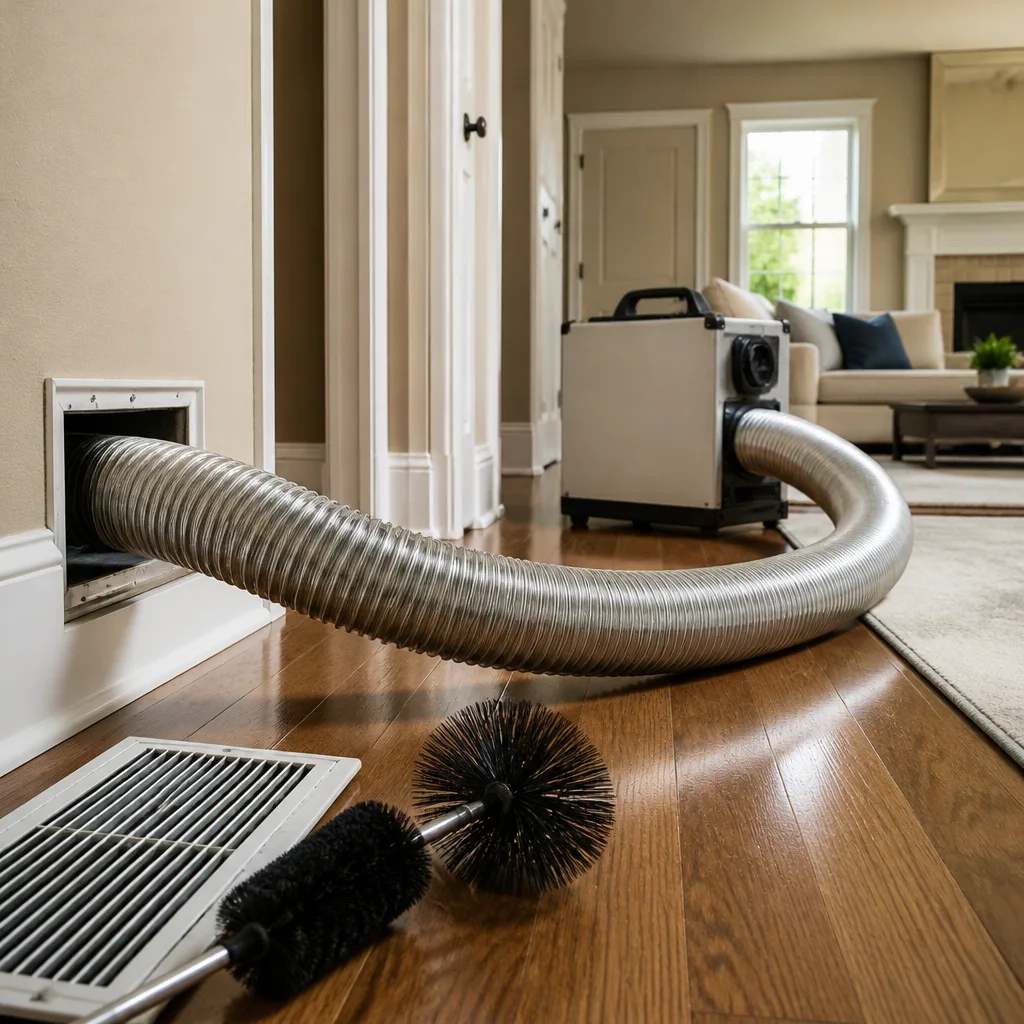 Whole-home duct cleaning
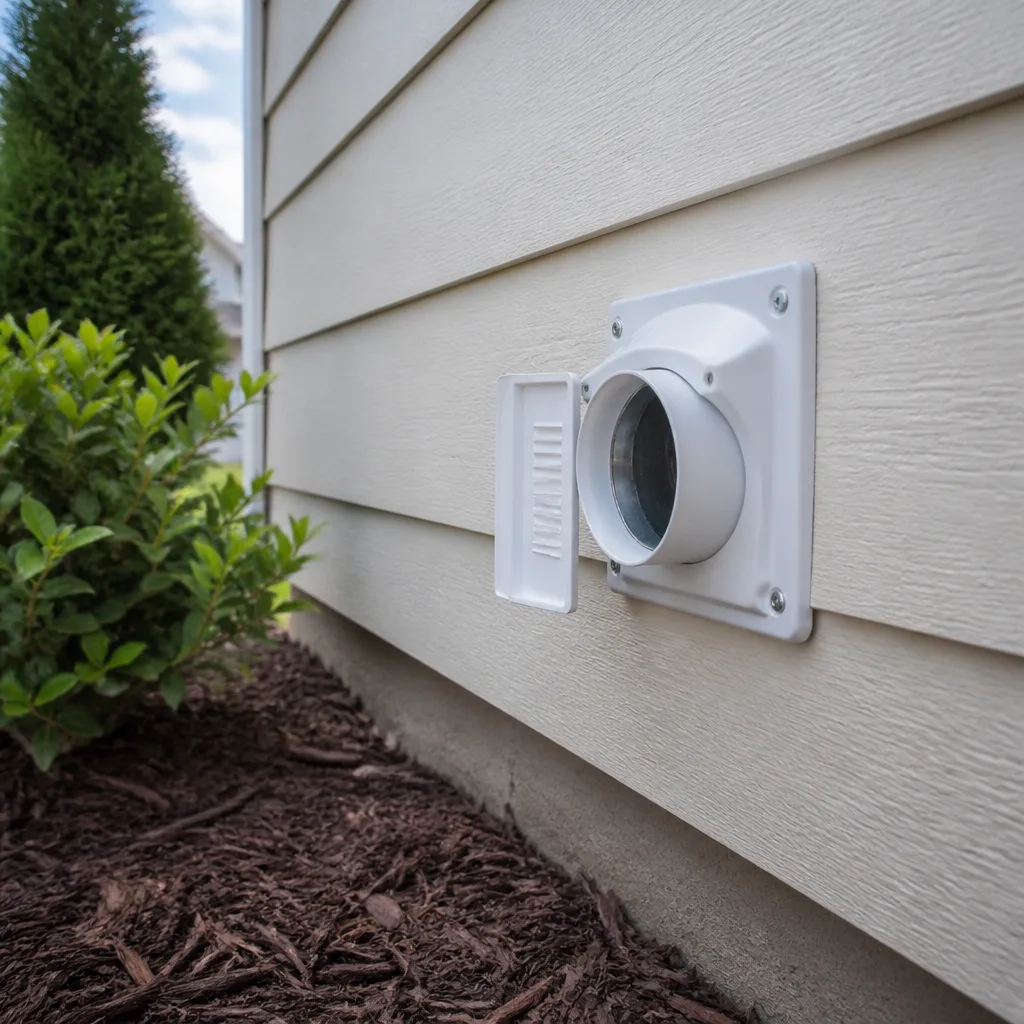 Dryer vent cleaning
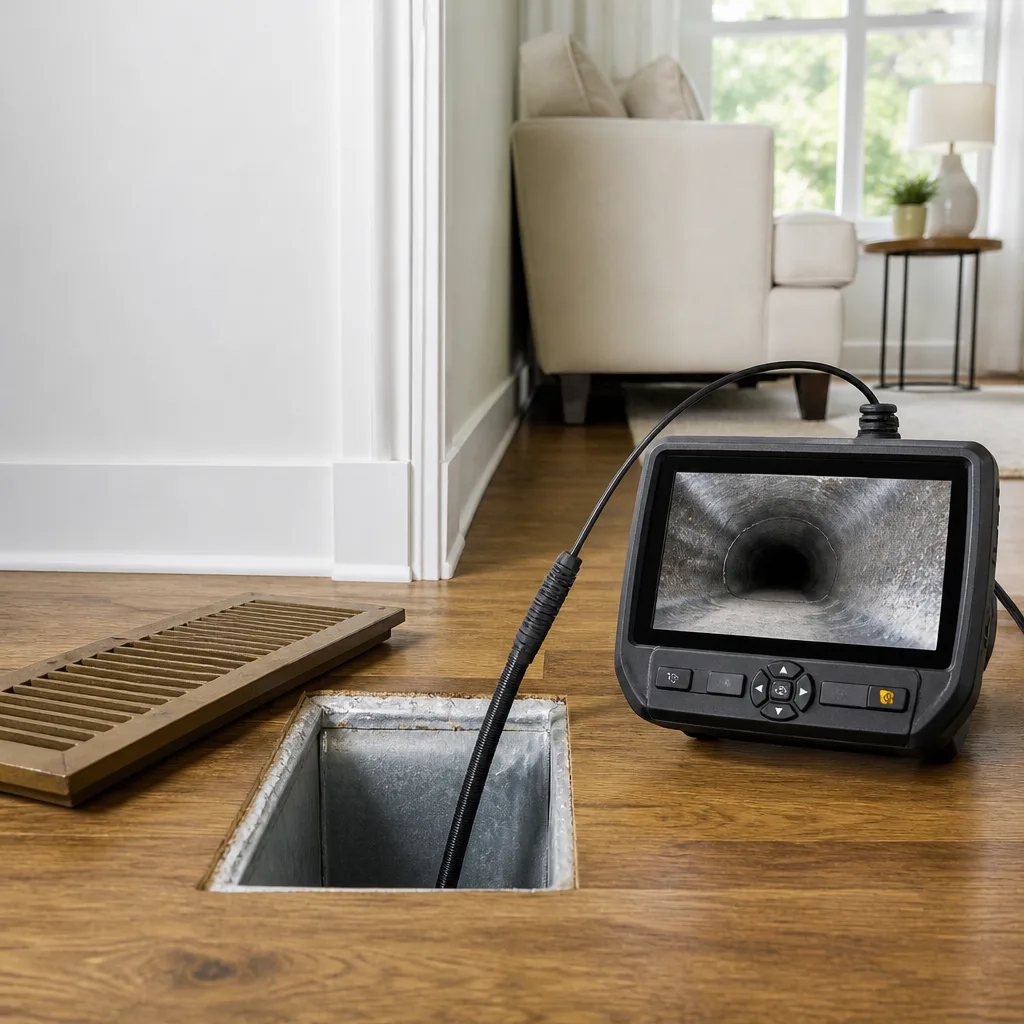 Camera inspection
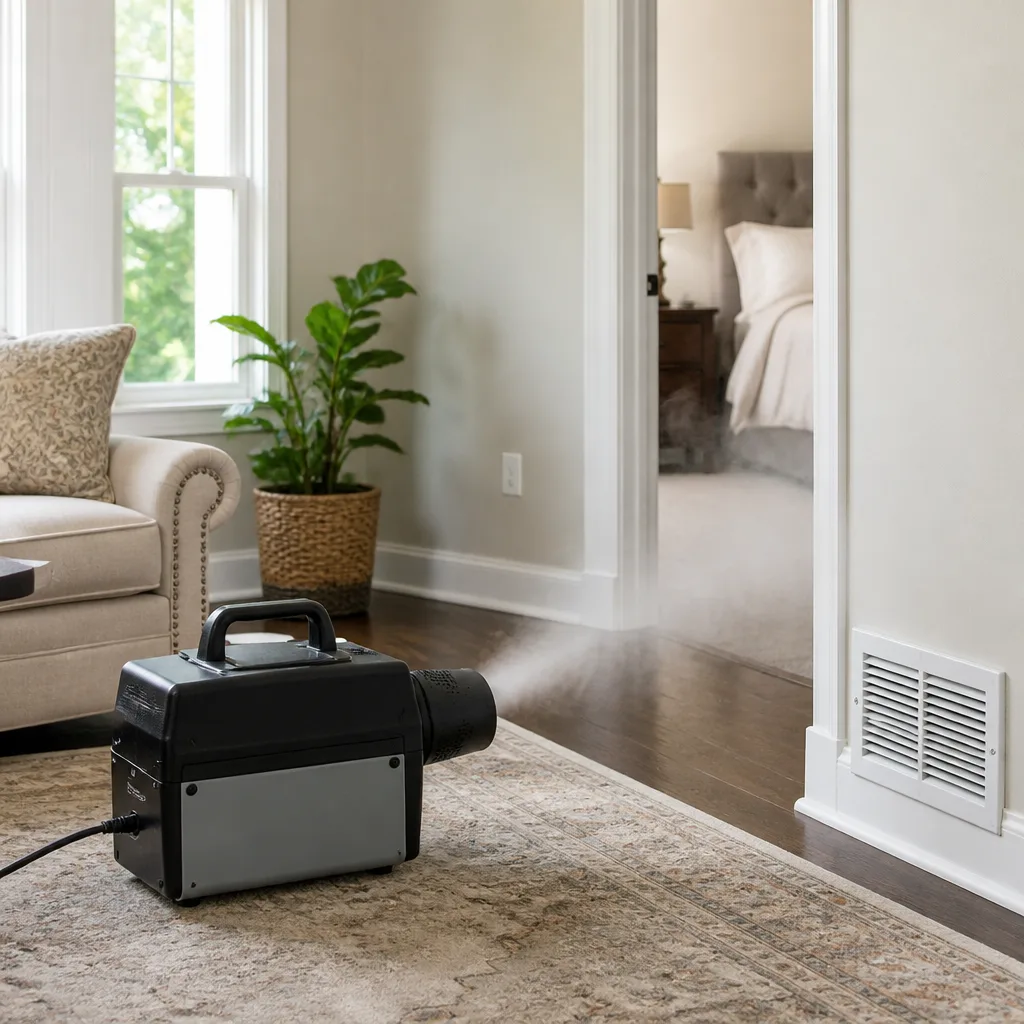 Sanitizing & deodorizing
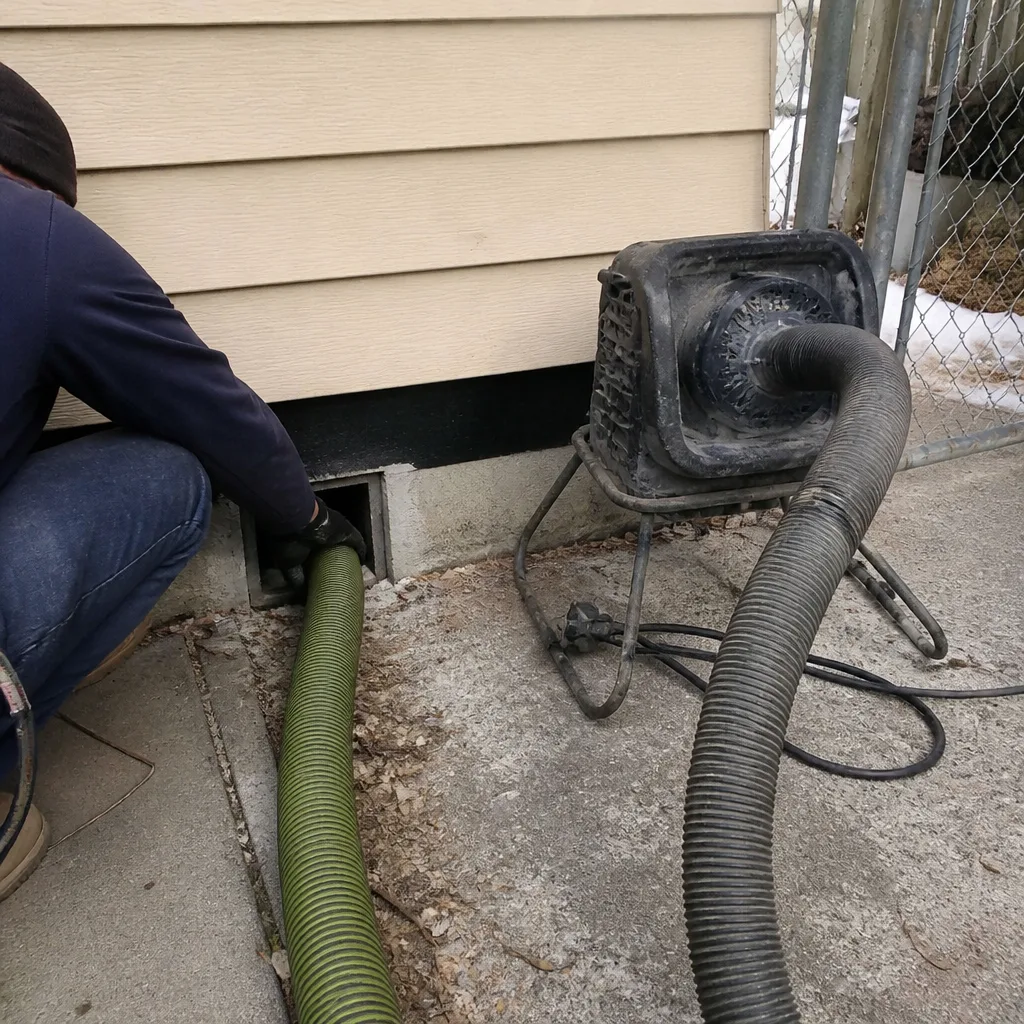
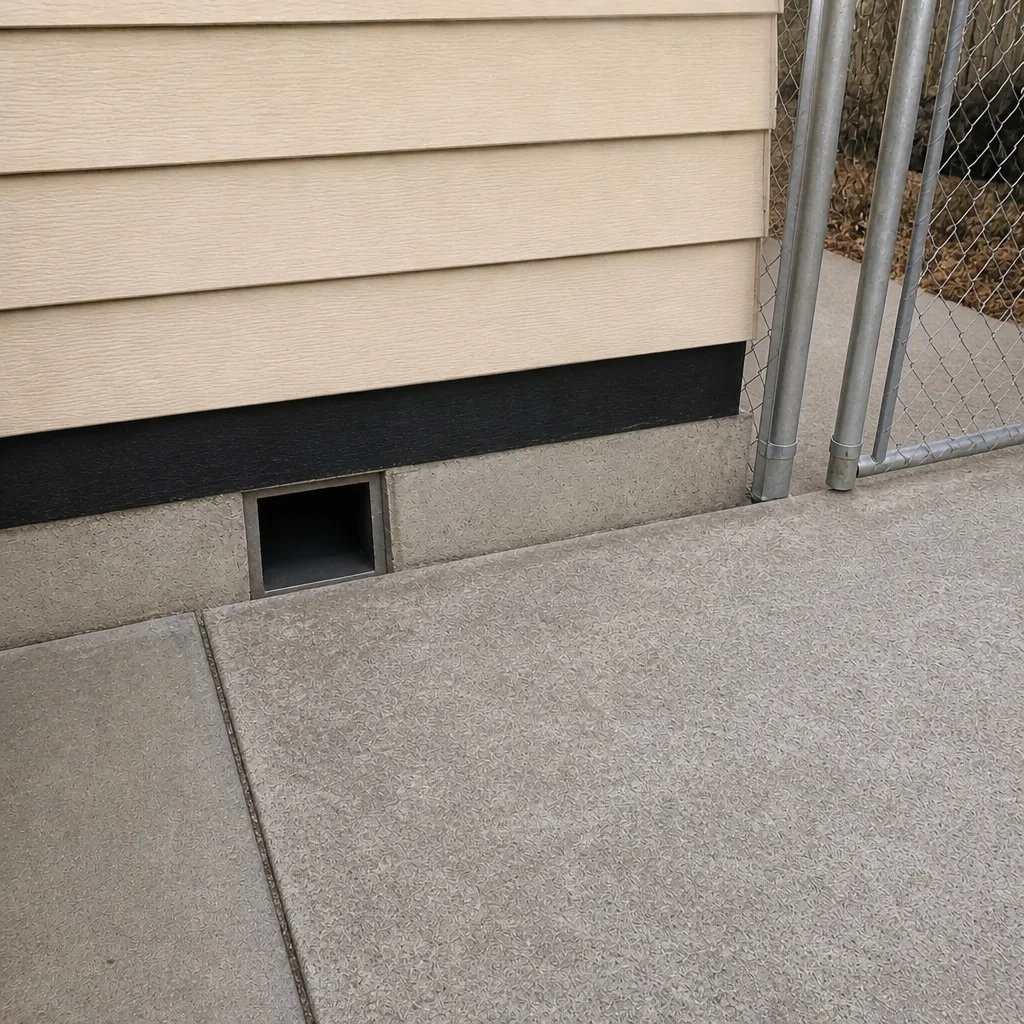
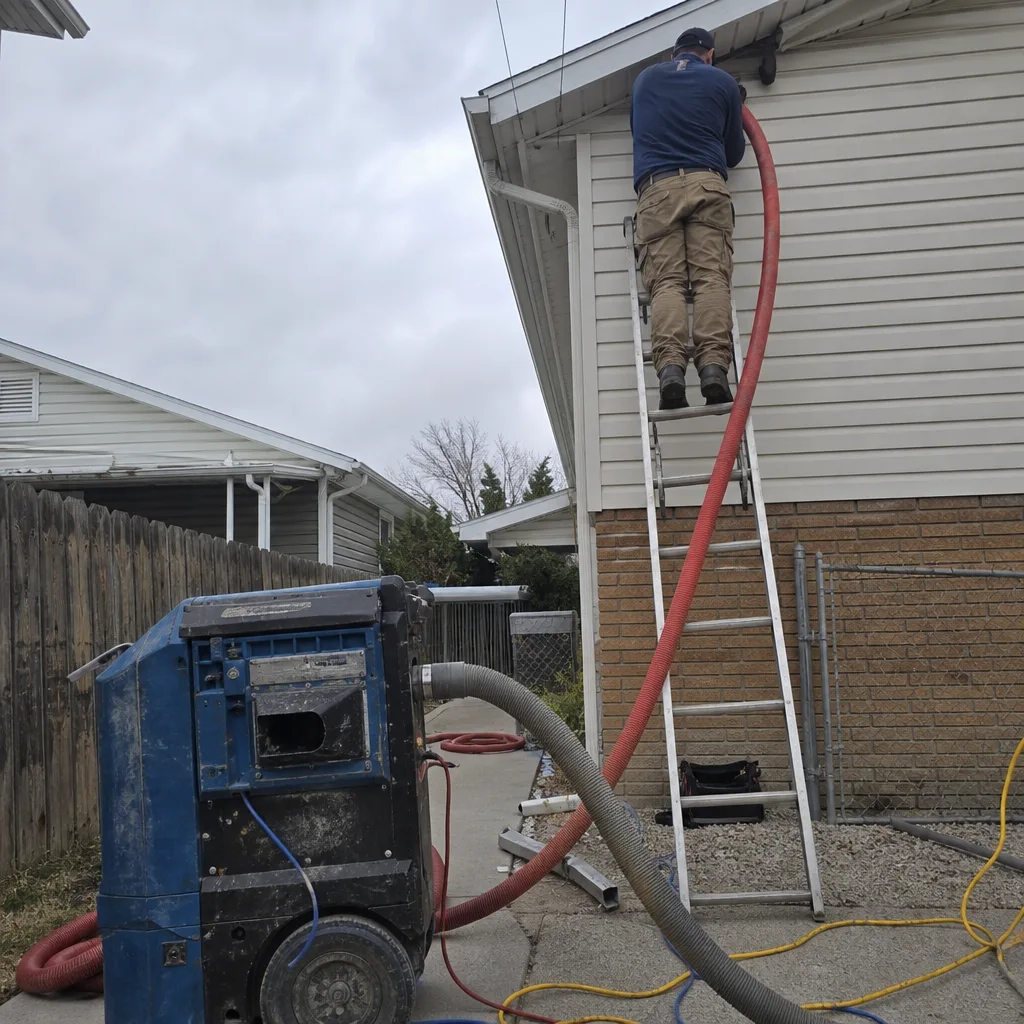
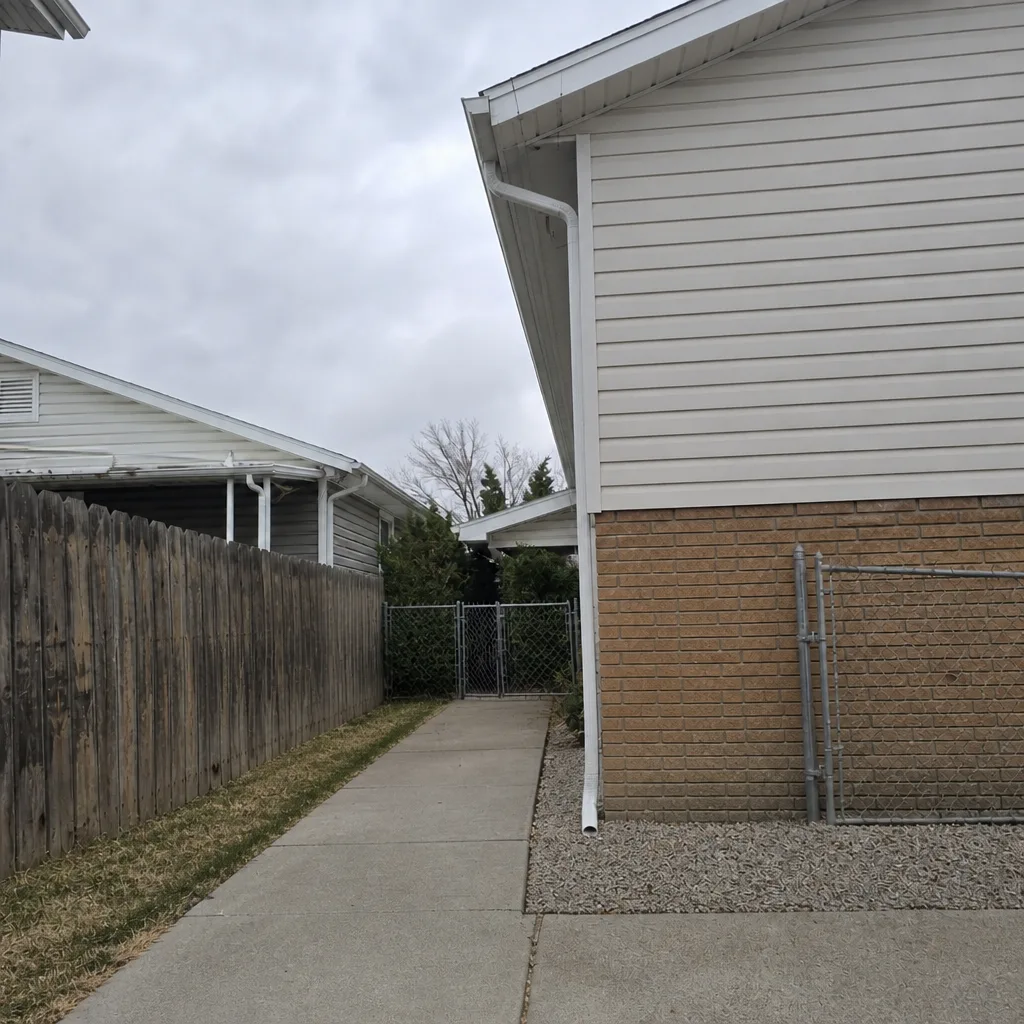
Whole-system duct and dryer vent check with before-and-after photos - you see exactly what came out of your vents
That "$99 whole-house special" is a bait ad - the real number appears once they are in your hallway, or the "clean" is a shop-vac at the register. We photograph the inside of your ducts before and after instead.
Seasonal Air Duct Cleaning Care for Ogden: Year-Round Homeowner’s Guide
Most homeowners treat duct cleaning as a calendar chore, something to pencil in once and forget. That approach misses what’s actually happening in an Ogden house, because the air moving through your ducts changes with every season here. Winter inversions trap particulate in the valley. Spring pulls in a heavy pollen load. Summer brings wildfire smoke that standard filters can’t fully stop. Fall is when your furnace wakes up and pushes a season’s worth of settled dust through every room. A single annual cleaning timed to a generic reminder will always miss at least one of those peaks. This guide walks through each season in Ogden, explains how that season loads your duct system, and shows you how to build a cleaning rhythm that matches real conditions rather than an arbitrary anniversary date.
Styles & brands we work with
- Whole-home duct cleaning
- Dryer vent cleaning
- Camera inspection
- Sanitizing & deodorizing
Quick Answer
Seasonal air duct cleaning in Ogden works best when you sync major cleans to the valley’s actual load periods rather than a fixed yearly date. For most homes, that means a full-system cleaning after inversion season in late winter or early spring, a register and grille cleaning in April or May, a follow-up sweep when wildfire smoke has been heavy in summer, and a full inspection at furnace reactivation in October. A two-year rhythm that hits those windows keeps your system cleaner than a same-date-every-year approach.
Table of Contents
- Why Ogden’s Climate Demands a Seasonal Approach
- Winter: Inversion Season and Return-Duct Buildup
- Spring: Pollen Load and Supply-Side Registers
- Summer: Wildfire Smoke and Submicron Particles
- Fall: Furnace Reactivation and Inspection Timing
- Building a Two-Year Service Rhythm
- What You Can Check Yourself Between Visits
- Common Mistakes to Avoid
- When to Call a Professional
- Frequently Asked Questions
- The Bottom Line
Why Ogden’s Climate Demands a Seasonal Approach
Ogden sits in a valley that traps air. During winter inversions, a layer of warmer air settles above the colder valley floor and holds particulate in place for days. The American Lung Association has ranked this valley among the worst for short-term particulate pollution. That’s not just a fact about the outdoors. Every time your HVAC runs during an inversion event, it pulls that outdoor air through the system and redistributes the particulate load through every room in the house. And it does this with the same ducts that have been collecting dust since the last cleaning.
The valley geography matters here. Homes on the bench above Ogden, toward the foothills, sit closer to the inversion layer’s edge and often see different particulate exposure than homes down on the flats. Wind patterns through the Weber River corridor push pollen and smoke differently depending on which side of the valley you’re on. That’s part of why a generic “clean once a year” schedule doesn’t work here. A house on the east bench and a house near the river see different loads at different times of year.
We’ve seen this pattern in our work across Ogden. The homes that stay cleanest are the ones where cleaning is timed to the actual seasonal peaks, not to a reminder app. Here’s the sequence we recommend, and we’ll break down each season in detail below.
- Late winter or early spring: Full-system cleaning after inversion season.
- April or May: Register and grille cleaning for pollen.
- Late summer: Follow-up sweep if wildfire smoke has been heavy.
- October: Full inspection at furnace reactivation.
Winter: Inversion Season and Return-Duct Buildup
Winter is the highest-load season in Ogden, and the part of your system that suffers most is the return side. Return ducts pull air back to the furnace, and that air carries dust, lint, and whatever particulate the furnace has been circulating during long heating cycles. A furnace running hard through an inversion event pushes that material into the duct walls, where it settles and stays.
By the time inversion season breaks in late winter or early spring, the return ducts in many Ogden homes are carrying more settled material than any other part of the system. That’s why late winter is the highest-value cleaning window here. A full cleaning at that point clears the winter load before the system starts pulling spring pollen through the same pathways.
The mechanical process matters more than most people realize. A shop-vac or a handheld brush won’t dislodge material that’s bonded to duct walls after a long heating season. Our standard approach uses a Rotobrush rotary-brush system to agitate and dislodge debris from the walls, then Nikro HEPA-rated extraction to trap what’s loosened. The rotary brush reaches the walls; the HEPA extraction keeps the loosened material from ending up back in your living space.
What a winter-post-season clean covers
- Return-side duct walls from the farthest registers back to the air handler.
- Supply trunk and branches, where winter circulation also deposits dust.
- Register grilles and the boots where duct meets the room.
- Blower compartment and coil surfaces handled as part of a full HVAC cleaning.
- Optional post-clean sanitizing if the winter has left musty or microbial odors.
One caveat worth knowing: if you live close to the bench, you’re dealing with more inversion exposure than a home near the river, and your cleaning may need to happen a couple of weeks earlier. Listen to how the system sounds and how air moves through the rooms. A return that feels weak or an upstairs room that struggles to heat are both signs the return ducts are loaded up.
Spring: Pollen Load and Supply-Side Registers
Spring in Weber County brings a heavy pollen season, driven largely by cottonwood and grass. Cottonwood season in particular, which runs from late May into June, dumps a visible load onto cars, sidewalks, and windowsills. The same material is being pulled into your home’s HVAC system every time it runs. What most homeowners don’t realize is that the supply side of the system, not the return, takes the hardest pollen hit.
Supply registers push conditioned air into the room. Pollen drifting through the room settles on register faces and grilles, gets held there by static, and migrates into the supply boot behind the register. A supply register that’s been through a cottonwood season often carries a fine yellow-to-gray film that no amount of household dusting clears. That’s the case for scheduling a register and grille cleaning in April or May, even if you’re not ready for a full-system service.
Why register-only cleaning matters in spring
A dedicated register and grille cleaning is a shorter service than a full duct cleaning, and it addresses the specific problem spring creates. It usually covers:
- Removal and cleaning of every supply and return register face in the home.
- Cleaning the boot space immediately behind each register.
- Agitating the first several feet of the supply branch where pollen settles.
- Blowing out the register hardware and reinstalling.
Full-system air duct cleaning in spring also works well, especially if you missed the late-winter window. If your home has an Aprilaire or Honeywell filtration system, spring is a good time to have the filter hump and enclosure checked at the same time, since pollen load accelerates filter loading. A dirty filter that’s bypassing or warped lets pollen straight through to the coil and downstream ducts.
Homes with a lot of cottonwood nearby, particularly along the river corridor and older neighborhoods with mature trees, tend to see the heaviest spring register load in Ogden. If you notice a fine yellow dust on the register faces in May, that’s the signal it’s time.
Summer: Wildfire Smoke and Submicron Particles
Summer smoke events have become a regular part of the Ogden air-quality calendar. The particles that matter most in smoke are submicron, meaning they’re smaller than the pores of a standard MERV-8 or MERV-10 filter can reliably catch. Those particles slip past furnace filters, get carried through the duct system, and settle on the duct walls or remain airborne in the living space. Then summer ends, the heating season begins, and the same material gets re-entrained and pushed back through your rooms.
A full cleaning isn’t always necessary right after a smoke event. What matters is understanding what’s actually in your ducts and whether the smoke load was heavy enough to justify action. After a significant wildfire smoke event in Ogden, we recommend a few steps.
- Change the furnace filter immediately after the smoke event clears. A loaded filter is a bypass waiting to happen.
- Consider a temporary filter upgrade to MERV-13. MERV-13 catches more submicron material than the standard filter, but it also restricts airflow. Use it temporarily during smoke events and return to your normal filter after, unless your equipment can handle the higher rating year-round. Check your furnace or air handler’s filter spec before making the switch.
- Inspect register faces and return grilles for visible gray or brown film. If smoke residue is visible, a register cleaning plus a duct sweep is worth scheduling before fall.
- Watch for musty or smoke-tinged odors when the system starts up. Odor is a sign that material has settled into the duct walls.
If you run a Honeywell or Aprilaire filtration unit or a UV treatment, smoke season is the right time to have those components checked. A bypassed or saturated filter hump can defeat the whole system. We’ve handled enough of these to know that the most common failure in smoke season is a filter that looks clean on the outside but has been loading from the inside for weeks.
Fall: Furnace Reactivation and Inspection Timing
October is when most Ogden homes switch the furnace back on for the season. It’s also the month when a lot of duct problems first become visible. The first heating cycle after a summer of disuse pushes a hot rush of air through ducts that have been sitting since spring. Whatever has settled into those ducts gets lofted into the living space. If the heat exchanger area or furnace cabinet has accumulated dust, that movement is more than a comfort problem.
Two concerns make fall inspection important. First, heated dust from a dirty heat exchanger area is a genuine indoor air concern. Second, accumulated dust and lint in the furnace cabinet is a fire risk, particularly around the burners and blower. Neither risk is visible from outside the system. An October inspection catches both before the heating season gets into full swing.
What a fall furnace-reactivation inspection includes
- Visual inspection of the furnace cabinet and blower compartment for dust and lint accumulation.
- Heat exchanger and flue area check for soot or debris.
- Filter condition and filter fit check.
- Return and supply duct inspection for visible deposits.
- Register airflow check room by room, which surfaces blockages, disconnected runs, or crushed flex duct.
- If ducts are visibly loaded, schedule the full-system clean before the heating season, not after.
If the inspection turns up disconnected or crushed runs, fall is also the right time to handle dryer vent cleaning and duct sealing in the same visit. A loose supply boot in an Ogden attic is a common finding, and it dumps conditioned air into the attic instead of the room. Sealing it before winter saves heat. The Abatement Technologies negative-air setup we use on larger jobs keeps the containment sealed while we work, so the material we’re dislodging doesn’t drift into the living space.
Building a Two-Year Service Rhythm
Most homes don’t need a full-system cleaning every year. They need a rhythm that catches the two or three highest-load seasons in an Ogden calendar while skipping the low-load ones. Here’s the two-year cycle that works for most homes in Ogden:
Year one
- Late winter (February or March): Full-system air duct cleaning after inversion season. Clear the winter load before spring pollen.
- April or May: Register and grille cleaning for pollen, plus filter check.
- October: Full furnace-reactivation inspection and light HVAC cleaning.
Year two
- Late summer (July or August): Follow-up sweep if the summer had heavy wildfire smoke in Ogden. If it was a smoke-free summer, skip this step.
- October: Full-system cleaning and inspection at furnace reactivation, carrying the off-year cleaning window.
- Winter: No scheduled service. Call if you notice new odors or weak airflow.
This rhythm does two things. It puts the heavy clean at the point of highest accumulated load, which is right after inversion season. And it keeps the annual October inspection consistent so you never head into a heating season without knowing what’s in the furnace cabinet and ducts. The two-year full-clean interval holds for most Ogden homes. Homes with pets, smokers, or higher occupancy should move to a full clean every year, and homes on the bench that face heavier inversion exposure may also benefit from an annual full clean rather than every other year.
What You Can Check Yourself Between Visits
Between professional cleanings, there’s a short list of things you can check yourself to know whether it’s time to call early. None of these involve working inside the duct system or opening the furnace cabinet. Those are for trained technicians.
- Register faces. Dust or film on the register grid is a sign of upstream loading. Wipe one clean, check it again in two weeks.
- Return grilles. A thick layer of dust or lint on the return grille after a heating season says the return-side ducts are carrying material.
- Filter condition. Check monthly during heavy heating and cooling seasons. A loaded filter that’s still in place is doing less good than you think.
- Airflow by room. Hold your hand in front of each register. Any room noticeably weaker than the others is a sign of a blockage, a disconnected run, or crushed flex duct. Worth a professional look.
- Odors. Musty smell at startup points to microbial growth or settled organic material. A smoke smell that persists after an event means material has settled in the system.
- Visible dust after cleaning a room. If dust returns to surfaces within a day or two of cleaning, the system is likely moving more than it should.
What you shouldn’t do is open the furnace cabinet, remove the blower, or reach into supply boots to check for material. Furnace components, gas lines, and blower assemblies are genuinely dangerous to work around, and a technician trained on the equipment is the right person to open the system. The checks above are sufficient to know whether you need a professional visit.
Common Mistakes to Avoid
- Cleaning on a fixed annual date. A reminder set to the same month every year will always hit the same season and miss the rest. In Ogden, keeping the calendar tied to conditions rather than the reminder is what actually lowers the load.
- Cleaning in June or December because the coupon was available. December is mid-inversion season, and cleaning then means the ducts reload within weeks. June is after pollen season and before smoke season. The mid-summer and mid-winter windows are usually the least valuable in Ogden.
- Skipping register-only cleaning because the full service is “on the list.” Register and grille cleaning in April or May is a shorter, targeted service that addresses spring pollen load. It doesn’t replace a full clean, but it does keep the register faces and boots clean without waiting for the full-system window.
- Running a standard MERV-8 filter through a heavy smoke event and hoping it catches everything. Submicron smoke particles bypass standard filters. A temporary MERV-13 upgrade during smoke events, then returning to your normal filter, works better than trying to filter smoke with a filter that can’t.
- Skipping the October inspection because the system “seems fine.” The furnace cabinet is where dust accumulation becomes a fire concern, and it’s not visible without opening the cabinet. An October inspection catches it before the heating season, not after.
- Believing the return side self-cleans. Returns carry more settled material than supply runs in most Ogden homes because they move more air by volume. A cleaning that skips the return side is leaving the largest load in place.
- Choosing a low entry price and not asking what the job actually covers. A duct cleaning that only wipes the register faces misses the material on the duct walls, in the boots, and in the return trunk. Ask what the service includes before you book, and ask how they contain the material they’re removing.
When to Call a Professional
Most Ogden homes will know it’s time for a professional cleaning when the seasonal signals line up. Visible dust returning to surfaces within a day or two of cleaning, a musty smell the first time the furnace kicks on in October, a persistent smoke smell after a summer event, or a room whose airflow is noticeably weaker than the rest all point to a system that needs a full clean. If you’ve had a renovation, added a pet, or moved into a home where you don’t know the last cleaning date, book a professional look before the next heating season. And if the furnace cabinet hasn’t been opened in a while, the October inspection is the right call regardless of everything else.
Ogden Air Duct Cleaning Pros offers free estimates in Ogden. We clean the entire air pathway, from the return trunk through the supply runs and registers, using professional Rotobrush rotary-brush systems and Nikro HEPA extraction so material is trapped, not redistributed. Call (844) 564-2864. We answer 24/7. Fast dispatch from 7am to 7pm, Sunday through Friday.
Frequently Asked Questions
Most Ogden homes do well with a full-system cleaning every two years plus an annual register and grille cleaning, timed to spring, and an October furnace inspection. Homes with pets, higher occupancy, or significant inversion exposure benefit from an annual full clean. The timing matters more than the interval, because Ogden’s seasons load your ducts in different ways at different times of year.
Late February or early March is the highest-value cleaning window in Ogden, because it comes after inversion season and before spring pollen. October is the second-best window, giving you a clean system at furnace reactivation. A full cleaning in December reloads within weeks, and a cleaning in June misses the pollen peak. Call (844) 564-2864 for an estimate and we’ll help you time it.
Temporarily, yes, if your system can handle it. Submicron smoke particles pass standard MERV-8 filters, so a MERV-13 filter during a smoke event captures more of the load. Return to your normal filter after the event unless your equipment’s spec calls for MERV-13 year-round, since higher MERV restricts airflow and can strain some systems. Check your furnace or air handler’s filter spec before switching, and call (844) 564-2864 if you’d like us to review the setup during a visit.
Yes. Dust and lint accumulation in the furnace cabinet, particularly around the burners and blower, is a genuine fire concern, and it isn’t visible from outside the system. An October inspection catches the accumulation before the heating season starts. Call (844) 564-2864 to schedule the inspection.
The return side gets the heaviest load. Return ducts move more air volume than supply runs, and during an inversion season the furnace is cycling hard for weeks. A winter clean that skips the return side is missing the largest deposit. Our standard service covers the full return trunk through the air handler, not just the supply runs.
It helps by removing the material the system is currently redistributing into your rooms. Ogden’s spring pollen load and winter inversion particulate both settle into the duct system, and a system that hasn’t been cleaned in years keeps moving that material. A full clean plus a register cleaning in spring takes the load out of the pathway, which is a specific mechanical result rather than a vague comfort claim. Call (844) 564-2864 for a free estimate and we’ll walk through what your system needs.
The Bottom Line
Ogden’s climate loads your duct system in four different ways through the year, and the highest-value cleaning window in most homes is late winter, right after inversion season. Pair that with a register cleaning in spring, a filter upgrade and possible sweep after heavy summer smoke, and an October inspection at furnace reactivation. That’s a two-year rhythm built around actual conditions, not a fixed date. Use the DIY checks between visits to know whether to call early. When you’re ready for a full clean or the October inspection, Ogden Air Duct Cleaning Pros covers the entire air pathway with professional equipment from Rotobrush, Nikro, and Abatement Technologies. Call (844) 564-2864 for a free estimate. We answer 24/7, with fast dispatch from 7am to 7pm, Sunday through Friday.
Written by the team at Ogden Air Duct Cleaning Pros.
See the difference
 Before
 After
 Before
 After
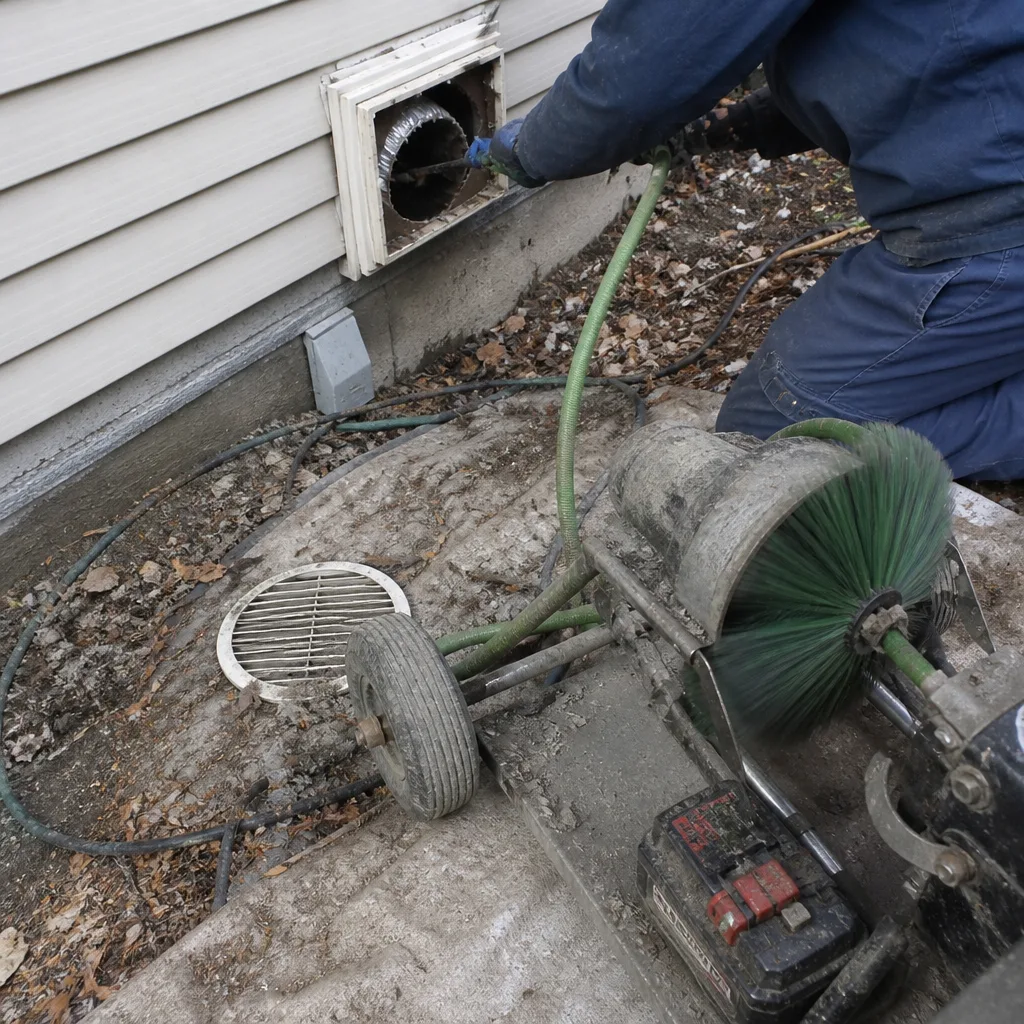 Before
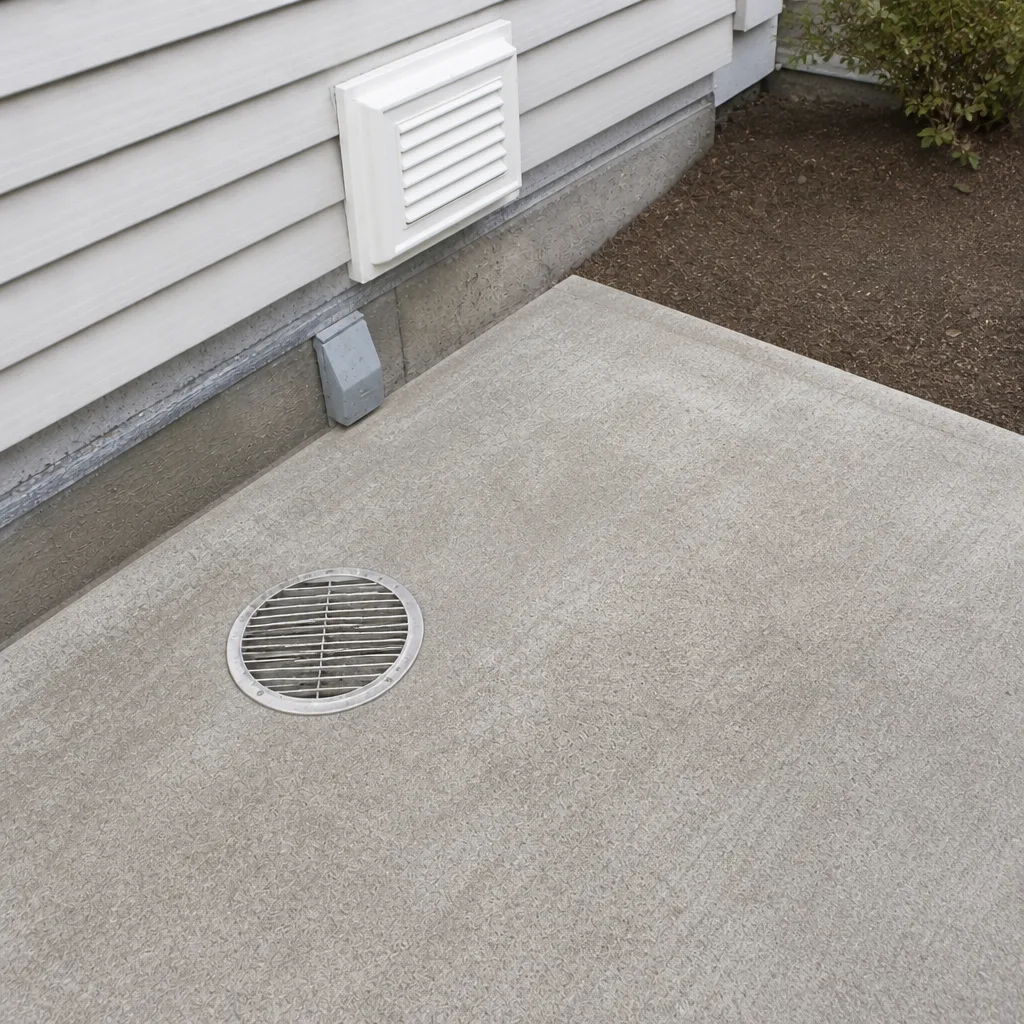 After