
Last updated November 25, 2026
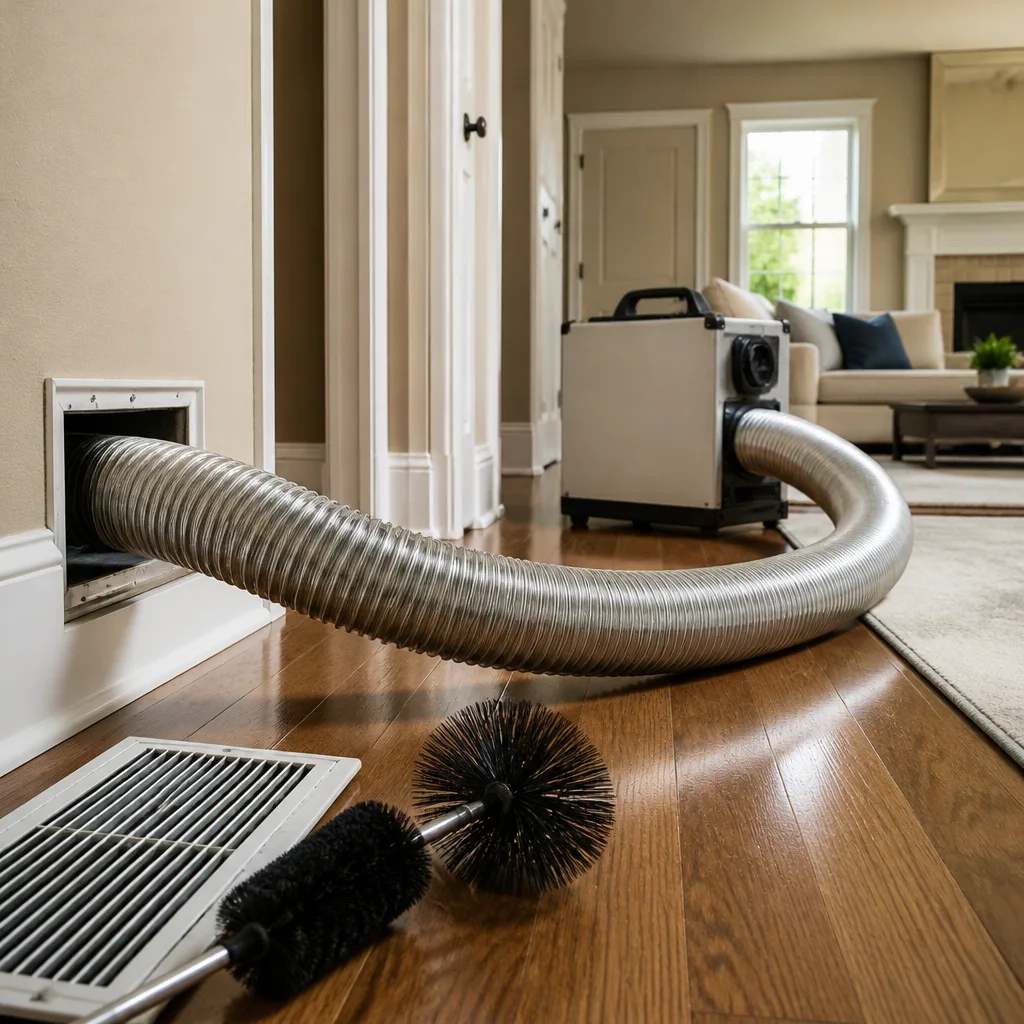 Whole-home duct cleaning
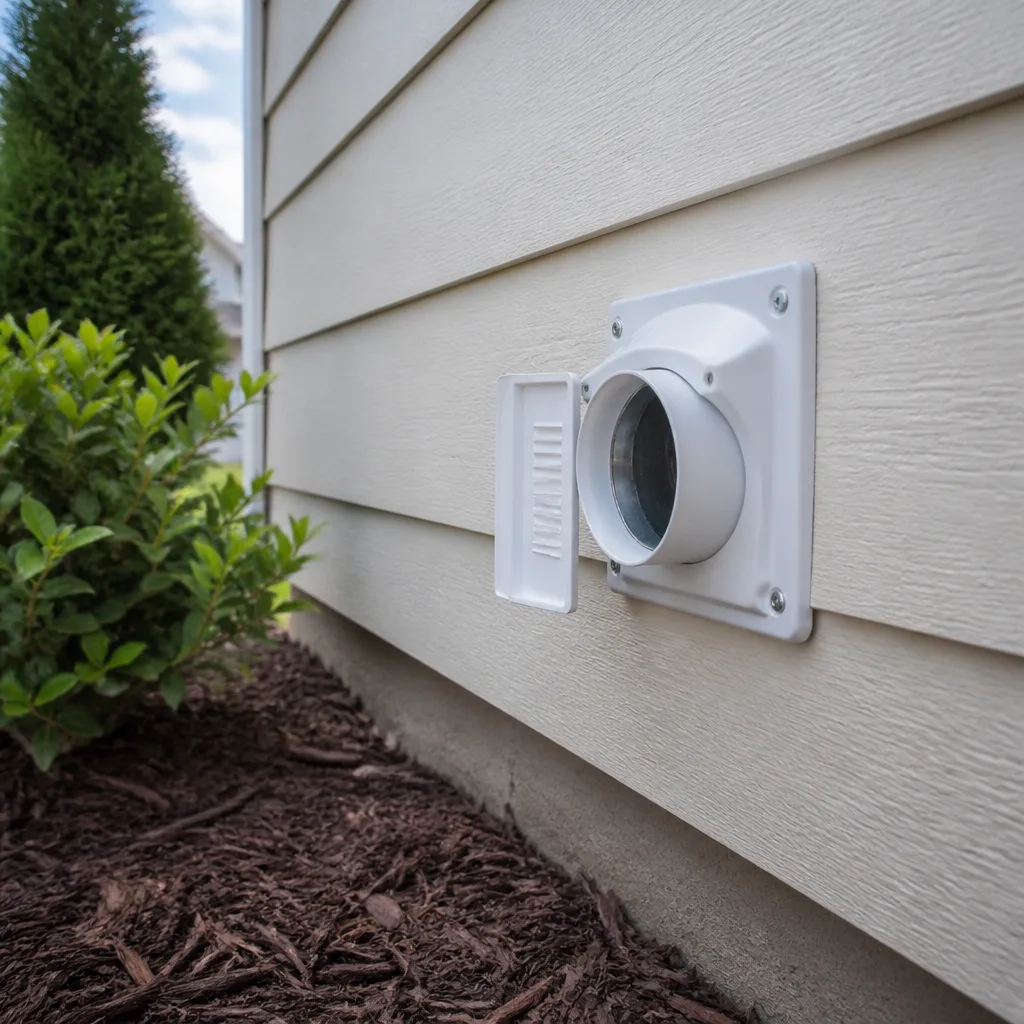 Dryer vent cleaning
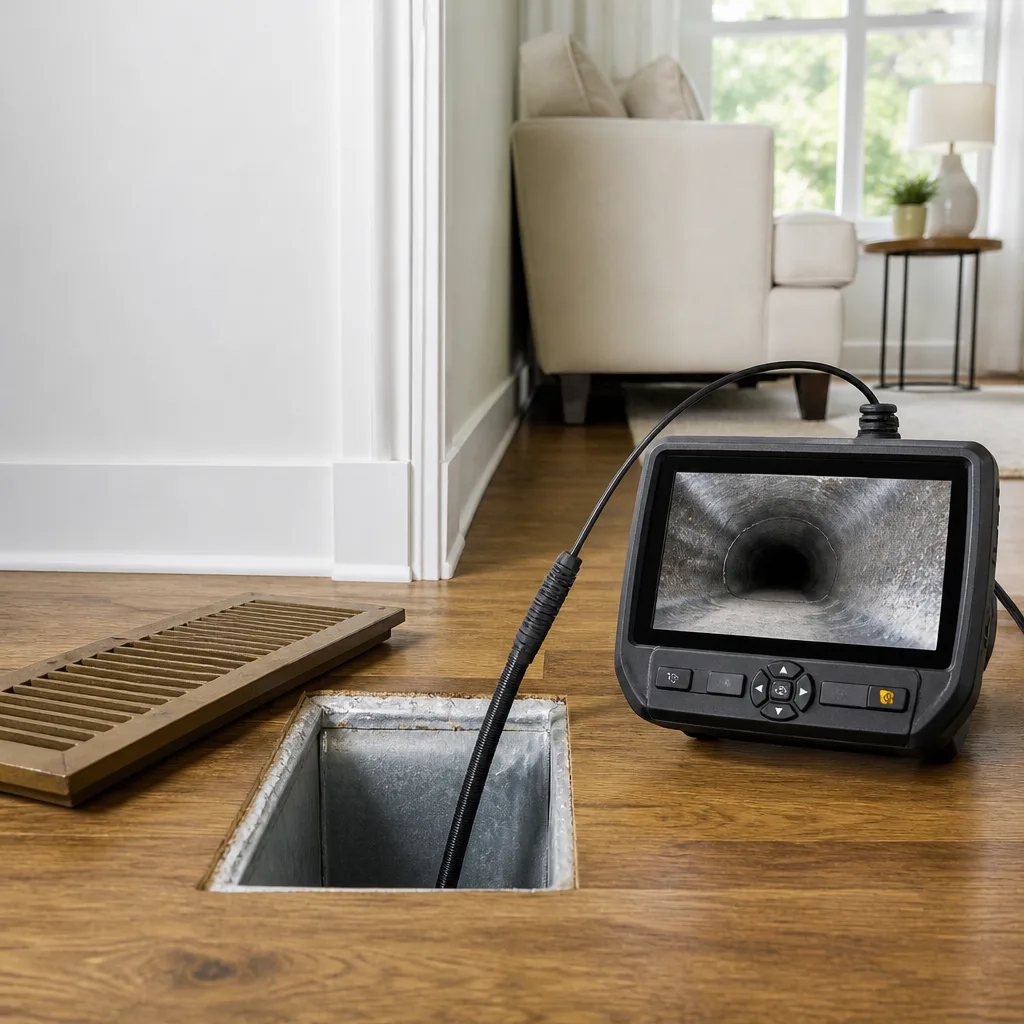 Camera inspection
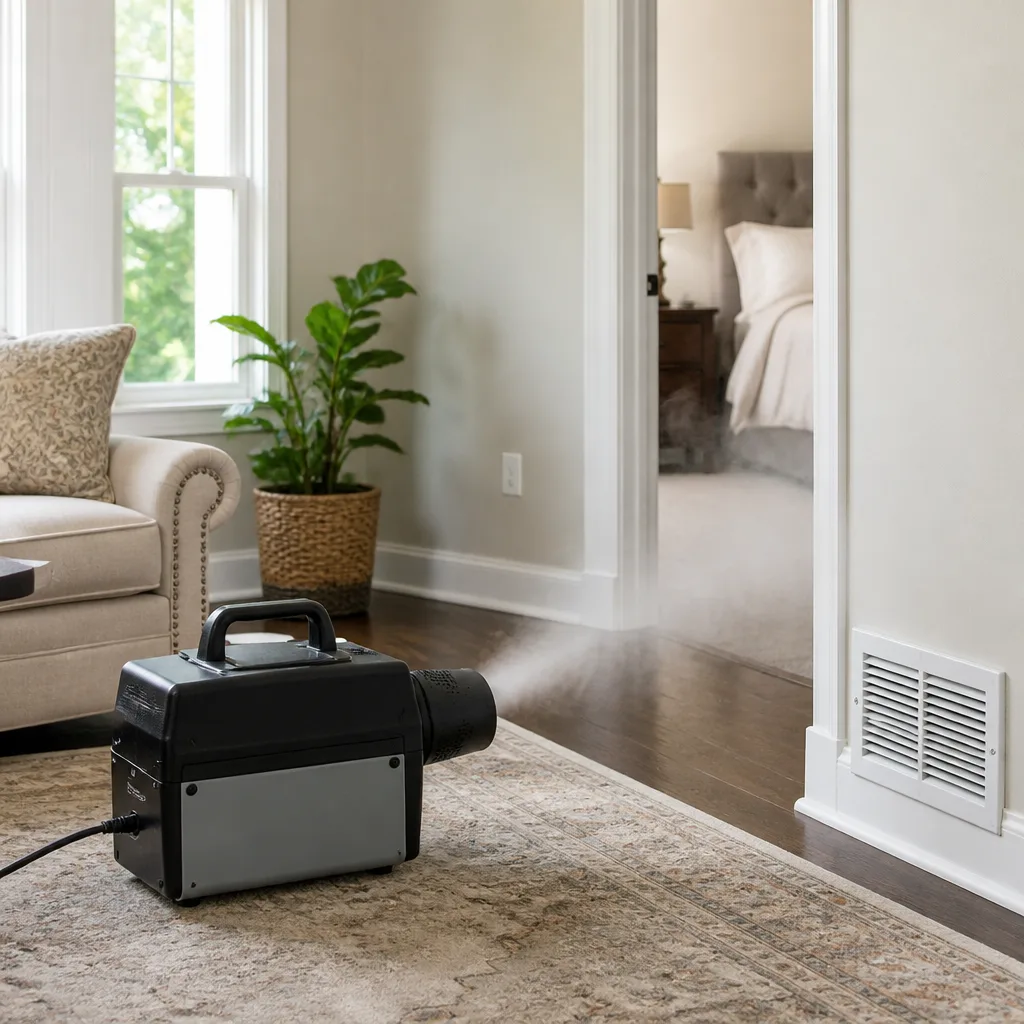 Sanitizing & deodorizing
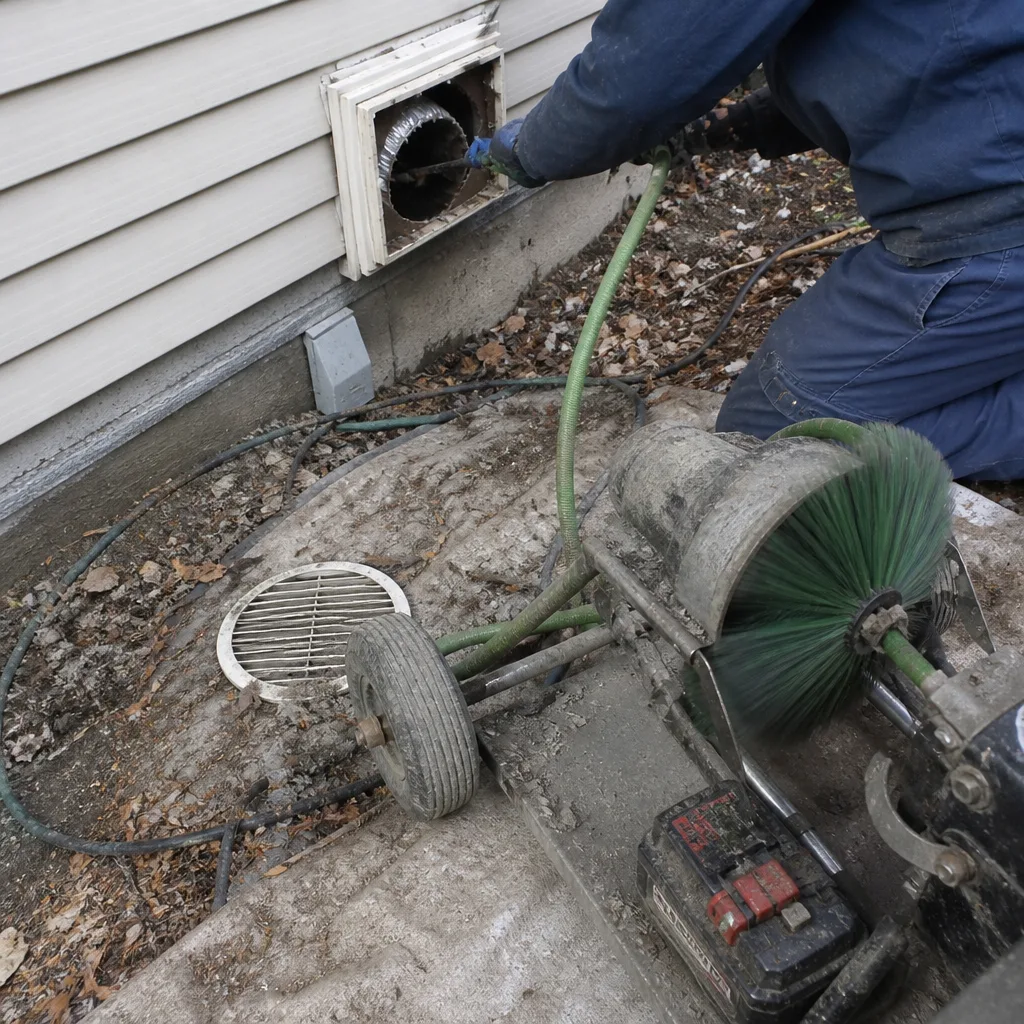
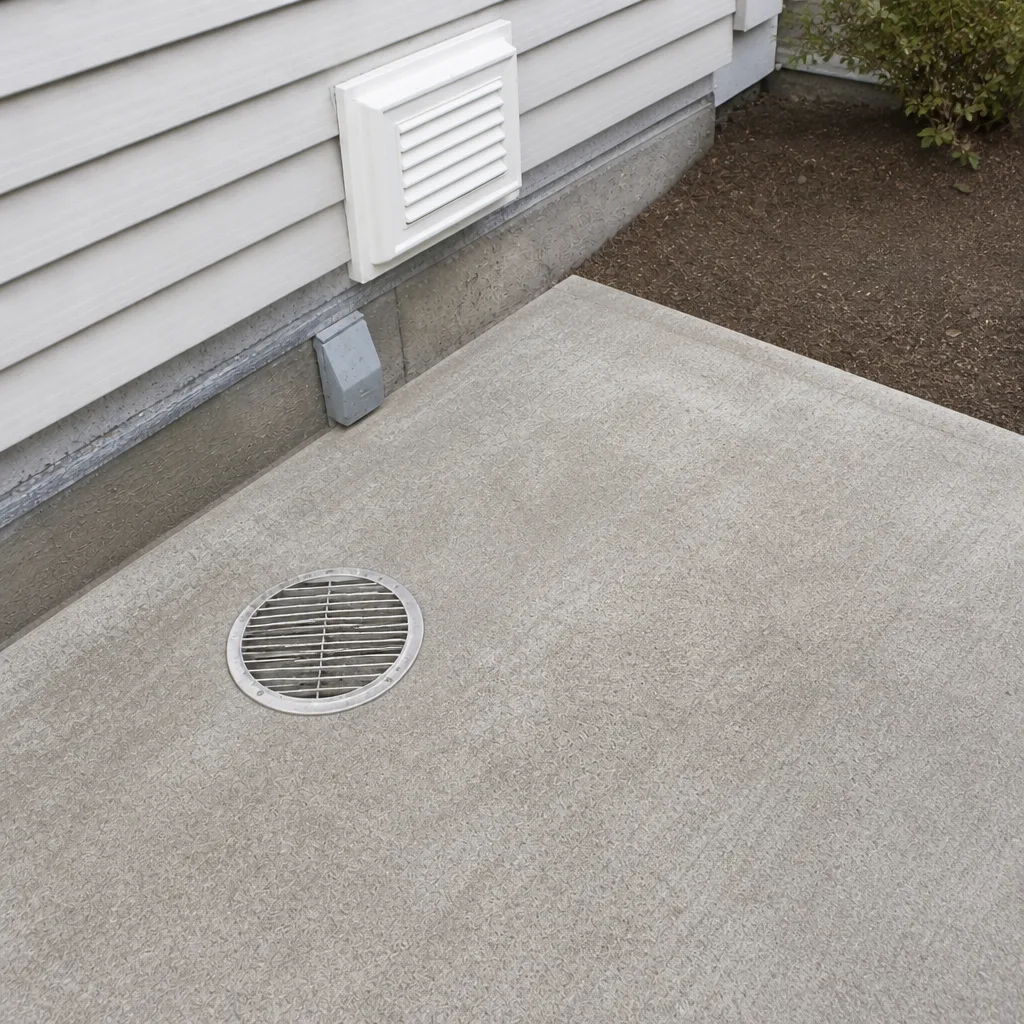
Whole-system duct and dryer vent check with before-and-after photos - you see exactly what came out of your vents
That "$99 whole-house special" is a bait ad - the real number appears once they are in your hallway, or the "clean" is a shop-vac at the register. We photograph the inside of your ducts before and after instead.
Air Duct Cleaning Troubleshooting in Ogden: Common Problems and How to Fix Them
If your HVAC tech has replaced the same filter three times in a year and airflow still feels weak, the problem probably isn’t the filter. It’s what’s upstream of it, inside the duct network itself. Most duct complaints get blamed on the furnace or the air conditioner, but a duct system is a mechanical assembly with its own failure modes: blocked runs, collapsing flex sections, leaking seams, caked mineral dust. Each one produces a different symptom, and each has a different fix. This guide sorts out which problem you’re actually looking at in an Ogden home, how to tell a dirty duct from a duct leak from a blower issue, and what it takes to correct each one.
Quick Answer
Most duct problems in Ogden trace back to one of five causes: heavy debris buildup, air leaks at joints and seams, collapsed flex duct, a clogged blower or coil, or microbial growth that a cleaning alone won’t resolve. Weak airflow with even room temperatures usually points to debris or a blower restriction; cold or warm spots in specific rooms point to leaks or collapsed runs; musty odor after cleaning means the sanitizing step was skipped. A proper diagnosis starts with the duct system, not the equipment.
Styles & brands we work with
- Whole-home duct cleaning
- Dryer vent cleaning
- Camera inspection
- Sanitizing & deodorizing
Table of Contents
- Dirty Duct vs. Duct Leak vs. Blower Problem: How to Tell the Difference
- What the Debris at Your Register Actually Tells You
- Why Musty Odors Come Back After Cleaning
- Spotting a Collapsed Flex Duct Without Tools
- The Ogden Buildup Problem: Mineral Dust and Desert Particulate
- Supply vs. Return Balance: A Simple Diagnostic
- The Step-by-Step Fix Sequence That Actually Works
Dirty Duct vs. Duct Leak vs. Blower Problem: How to Tell the Difference
These three problems produce overlapping symptoms, which is why so many homeowners replace a perfectly healthy furnace when the real issue is a leaking trunk line. The distinction comes down to two things: how the air feels at the register, and whether room temperatures drift apart from each other.
A dirty duct typically shows even airflow reduction. Every register in the house feels weak, but no single room is dramatically worse than another. The system is simply moving less air because the duct walls are coated with debris and the static pressure is up.
A duct leak behaves differently. You’ll see strong airflow at registers close to the air handler and weak airflow far away, because the air is escaping into a crawlspace or attic before it reaches the far rooms. That leak also pulls in unconditioned air, so those far rooms run several degrees off the thermostat set point.
A blower problem is the easiest to misread. If the blower wheel is caked with dust or the motor is failing, airflow drops system-wide, but the ductwork itself may be reasonably clean. You can often hear the difference: a loaded blower produces a strained, quieter sound than normal, while a dirty duct system usually produces a louder rush of air at the supply registers as static pressure builds.
Here’s the practical sorting rule we use:
- Uniform weak airflow, normal sound: likely dirty ducts or a restricted filter.
- Strong near, weak far, temperature drift: likely a duct leak or disconnected run.
- Weak everywhere, quieter than usual, motor hums: likely blower or coil restriction.
- One or two rooms dead, others fine: likely a collapsed or disconnected flex run to those rooms.
Ogden homes built across several decades show all three patterns. Older homes on the east bench often have metal duct with taped seams that have dried and separated. Newer construction on the west side typically uses flex duct that can kink or crush if it was installed too tightly around a joist. In our experience, the age and construction style of the duct system tell you a lot about which failure mode is likely before anyone opens a panel.
What the Debris at Your Register Actually Tells You
The dust pattern on your supply register is a diagnostic readout, not just a cleaning nuisance. Where debris collects tells you where contamination is concentrated in the duct run, and how heavy that debris looks tells you roughly how long it’s been accumulating.
If the register grille is coated on the room-facing side, most of that dust is airborne particulate settling out of the room air, and it says little about the duct interior. If the dust is on the inside face of the grille and along the boot behind it, that’s coming from the duct. That’s the sign that matters.
Freshly distributed, uniform gray dust on the inside of the boot usually points to particulate that entered at the return and traveled the full run. Clumpy, darker, or greasy-looking debris points to moisture involvement somewhere upstream. Stringy material or lint-like wads in a supply boot suggests a leak pulling fibers in from a crawlspace or attic.
For renters and property managers, this is a useful documentation habit: photograph the inside of a few register boots before cleaning and after. That record shows exactly whether the work addressed the source or just wiped the visible grille. It’s also the cheapest evidence that a cleaning actually happened.
One caution: registers on the lowest floor of an Ogden home are typically the dirtiest because they’re closest to the return inlet and see the most debris drop-out. Don’t assume the whole system is uniformly loaded. The return-side registers usually carry the heaviest debris, and any cleaning that skips the return trunk and only touches supply boots hasn’t touched the source.
Why Musty Odors Come Back After Cleaning
If your ducts smell musty again a few weeks after a cleaning, the cleaning didn’t fail. The sanitizing step was skipped. Mechanical cleaning removes the physical debris; it doesn’t kill or neutralize microbial growth that has already established in the duct lining, on the evaporator coil, or in the drain pan.
Moisture is the underlying cause. Every time the system runs in cooling mode, condensation forms on the coil and in the drain pan. If that moisture pools or drains slowly, it creates a wet film that supports mold and bacteria. Vacuuming removes the growth but leaves the conditions, so the colony re-establishes once the system runs again.
The order of operations matters. Sanitizing before mechanical cleaning just seals contaminants under a wet film. The correct sequence is:
- Contain the work area with negative-air pressure so loosened debris doesn’t drift into living space.
- Agitate debris from the duct walls with a rotary brush.
- Extract with a HEPA-rated vacuum so captured material stays captured.
- Inspect the coil, drain pan, and duct lining for moisture and microbial growth.
- Apply a sanitizing treatment to the cleaned interior surfaces.
- Verify airflow and, if the coil was the source, address the drainage issue.
This is the step where equipment really separates one provider from another. We use Abatement Technologies negative-air equipment so contaminants are captured rather than redistributed, then apply Guardsman sanitizing treatments after the mechanical cleaning to address mold, bacteria, and odor at the source. In an Ogden home, this matters more than it does in a dry climate because the furnace runs hard through cold months and recirculates air repeatedly; any surviving growth gets blown through the house every cycle.
If the smell is coming back, the fix isn’t another cleaning. It’s a sanitizing step plus a look at why the moisture is there in the first place. Our air duct cleaning service covers both, and if you need the air handler and coil addressed as well, we fold that into HVAC cleaning.
Spotting a Collapsed Flex Duct Without Tools
A collapsed flex duct is one of the most common causes of a dead room in an Ogden home, and you can usually identify it without a pressure gauge. The technique is to compare supply pressure feel with return pull feel at the same register, and to compare airflow room to room with your hand.
Here’s the field test, using nothing but your hand and a sheet of paper:
- Run the system on fan-only mode so the temperature is even.
- Hold a strip of tissue over each supply register at the same angle and watch how far it deflects.
- Note any register where the deflection is dramatically weaker than the rest.
- Hold the same tissue near the return grille; a healthy return pulls it firmly and holds it.
- Compare the two readings; a strong return with a weak supply on the same trunk points to a break in that run.
The pattern is the diagnosis. If the return pulls hard but a specific supply barely deflects, that supply run is likely crushed, kinked, or disconnected. Flex duct installed too tightly around a sharp joist corner, or compressed short during installation, can lose most of its capacity without showing any external damage.
If a whole zone is dead, suspect the trunk connection at the plenum rather than individual runs. If only one room is weak, the common culprits are a crushed run, a disconnected boot, or a closed damper that nobody remembers shutting.
Once you’ve found the weak run, the fix is usually a duct repair and reseal rather than a full replacement. Our duct repair and sealing work addresses collapsed runs, disconnected boots, and leaking seams in one pass, which is often more useful than cleaning the whole system.
The Ogden Buildup Problem: Mineral Dust and Desert Particulate
Duets in Ogden accumulate a specific kind of debris that standard brushing alone often misses. It’s a dense, cemented layer where mineral dust from local water vapor binds with fine desert particulate, and it behaves more like a crust than a loose coating.
The mechanism is straightforward. Ogden’s water is hard, and any humidifier, evaporative cooler, or even a plumbing leak introduces mineral-laden moisture into the air stream. That moisture carries calcium and magnesium residue. When the system dries out, those minerals crystallize and bind the fine dust that blows in through return air from the surrounding desert environment. The result is a thin, hard cake on the duct walls and the inside of boots.
Loose debris vacuums up easily. Mineral cake doesn’t. It releases in flakes when disturbed and returns to the airflow if not properly agitated. A straight HEPA extraction without brush agitation will pass right over it, which is why some cleanings look done and the airflow is no better.
The practical process we use on this kind of buildup:
- Brush-agitate with a rotary system that contacts duct walls directly; this breaks the crust mechanically.
- Slow the extraction pass; fast vacuums miss agitated particles before they re-settle.
- Inspect the boots and coils for mineral scale, not just dust.
- Apply a sanitizing treatment to managed microbial concerns on the cleaned surface.
- Recommend a filtration upgrade so the next accumulation is slower.
This is also where filtration hardware earns its keep. A high-MERV filter matched to the blower, or a whole-home Aprilaire filtration system, captures more fine particulate than a standard throwaway, which reduces the mineral-dust loading rate. We work with Honeywell and Aprilaire products so the recommendation comes from what the duct system can actually support, not a default filter swap.
Our Ogden Air Duct Cleaning Pros team handles the whole pathway, and if you also have a dryer vent that’s been ignored for years, that buildup follows the same principle: dryer vent cleaning is worth doing on the same visit.
Supply vs. Return Balance: A Simple Diagnostic
Pressure balance across the supply and return sides of a duct system is a useful health check, and you can perform a rough version without any instruments. The principle: a system in balance draws roughly what it delivers. When supply and return don’t match, air is leaking somewhere.
The no-tool version, done on a calm day with the system running:
- Close all interior doors so each room’s air can’t escape through gaps.
- Stand in each room and feel whether the door pulls closed against the frame or is difficult to close gently.
- Listen at the door gaps; a strong whistle means the room is pressurized, indicating a return problem.
- Check the door undercut; a room that pulls the door shut has too much supply for its return.
A room with too much supply and too little return pressurizes and pushes conditioned air out through leaks and gaps. A room with excess return depressurizes and pulls outside air in. Both waste energy and both distort temperature.
For a proper reading, a technician uses a manometer to measure static pressure across the air handler and at individual trunks. That reading shows total external static pressure, which reveals restriction from dirty filters, dirty coils, or collapsed ducts. Our technicians have up to 15 years of experience interpreting these numbers on Ogden homes, and it’s the difference between guessing and knowing which run is restricted.
A related problem: homes in the older Ogden neighborhoods often had a central return added later, leaving bedrooms with no return path except the door undercut. That’s not a cleaning problem, it’s a design problem, and no amount of duct cleaning will fix it. It needs a return-air correction.
The Step-by-Step Fix Sequence That Actually Works
Troubleshooting a duct problem in the wrong order wastes money. Cleaning before resealing means you clean again after the reseal. Resealing before diagnosing a collapsed run means you reseal a bad connection. The correct sequence is diagnosis, then correction, then cleaning.
Our five-step process:
- Inspect and test. Check airflow at each register, measure supply versus return, and look for leaks and collapsed runs. This is where you find out whether the problem is debris, leaks, or equipment.
- Repair and reseal. Fix collapsed sections, reconnect disconnected boots, seal leaking seams and joints. Air leaking into a crawlspace doesn’t need cleaning, it needs closing.
- Mechanically agitate the ducts. A rotary brush system dislodges caked debris from the duct walls. This is what loosens the mineral-bound particulate that a vacuum alone leaves behind.
- Extract with HEPA containment. A Nikro HEPA vacuum, combined with Abatement Technologies negative-air pressure, traps what’s been loosened rather than pushing it back through the house.
- Sanitize and advise on filtration. Apply a Guardsman sanitizing treatment if the inspection found microbial concerns, and recommend a filtration setup matched to the equipment.
Every step addresses a different failure mode from this guide. Skip the inspection and you’re guessing. Skip the reseal and you undo the cleaning. Skip the sanitize and the smell returns. Skip the filtration advice and the buildup starts again.
Here’s the honest version of what cleaning actually costs, so you have a real number in your head before you get a quote:
- Typical whole-home duct cleaning: $350-$700 for an average Ogden home, depending on square footage and number of registers.
- Dryer vent cleaning alongside duct work: $100-$185.
- Duct repair and sealing: priced per job after inspection, typically from around $150 for a small single-run repair.
- HVAC coil and air-handler cleaning: $150-$400 depending on system layout.
- Post-clean sanitizing treatment: $75-$200 added to a cleaning.
Every figure above is a typical estimate. The written estimate sets the final price, and we agree the price before work starts. No per-vent pricing, no surprise invoice.
Common Mistakes to Avoid
These come up repeatedly when a homeowner has already tried to fix a duct problem themselves.
- Cleaning before diagnosing. Cleaning a duct system with a collapsed run doesn’t fix airflow, it just moves the debris into a crushed section and makes the problem worse. Test first.
- Trusting per-vent pricing. A quote that charges per register encourages the cheapest brush-and-forget job. A flat price per system is the only honest way to price the work, because no two register layouts contain the same amount of debris.
- Skipping the return side. The return trunk and the boots behind the return grilles usually hold the heaviest debris in an Ogden system. Cleaning only the supply vents leaves the source untouched.
- Assuming musty smell means failed cleaning. The smell in an Ogden home usually means the sanitizing step was skipped, not that the mechanical cleaning was bad. The coil and drain pan need a look too.
- Upgrading the filter without checking the blower. A higher-MERV filter on a blower that’s already struggling restricts airflow further. Match the filter to the equipment, and clean the coil before you upgrade filtration.
- Ignoring a dead room for years. A collapsed flex run is cheap to fix while the boot is still intact. Left alone, the duct can pull in attic air and moisture and turn a repair into a replacement.
- Not documenting the work. Before-and-after photos of your ducts are the difference between knowing the work was done and hoping it was. Ask for them every time.
We’ve seen every one of these play out in Ogden homes. The pattern is always the same: someone tried the cheapest version of the fix, and it didn’t address the cause. Getting the diagnosis right is the whole battle.
If you’ve tried to troubleshoot and you’re still not sure which failure mode you’re facing, our troubleshooting guide runs through the symptoms in order. If the diagnosis points to dirty ducts, book a cleaning; if it points to a leak or a collapsed run, book the repair. Our duct repair and sealing service covers the fix, and our Ogden location page has the contact details.
See the difference
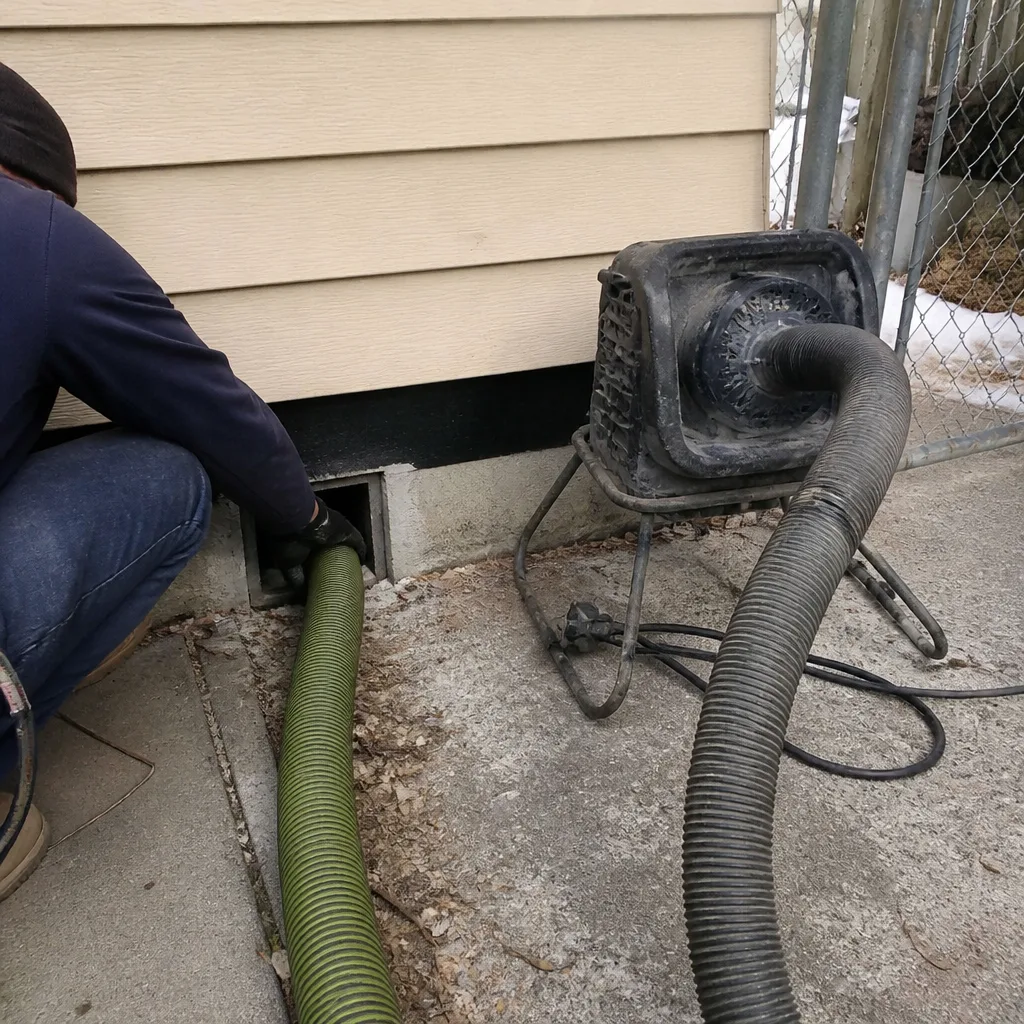 Before
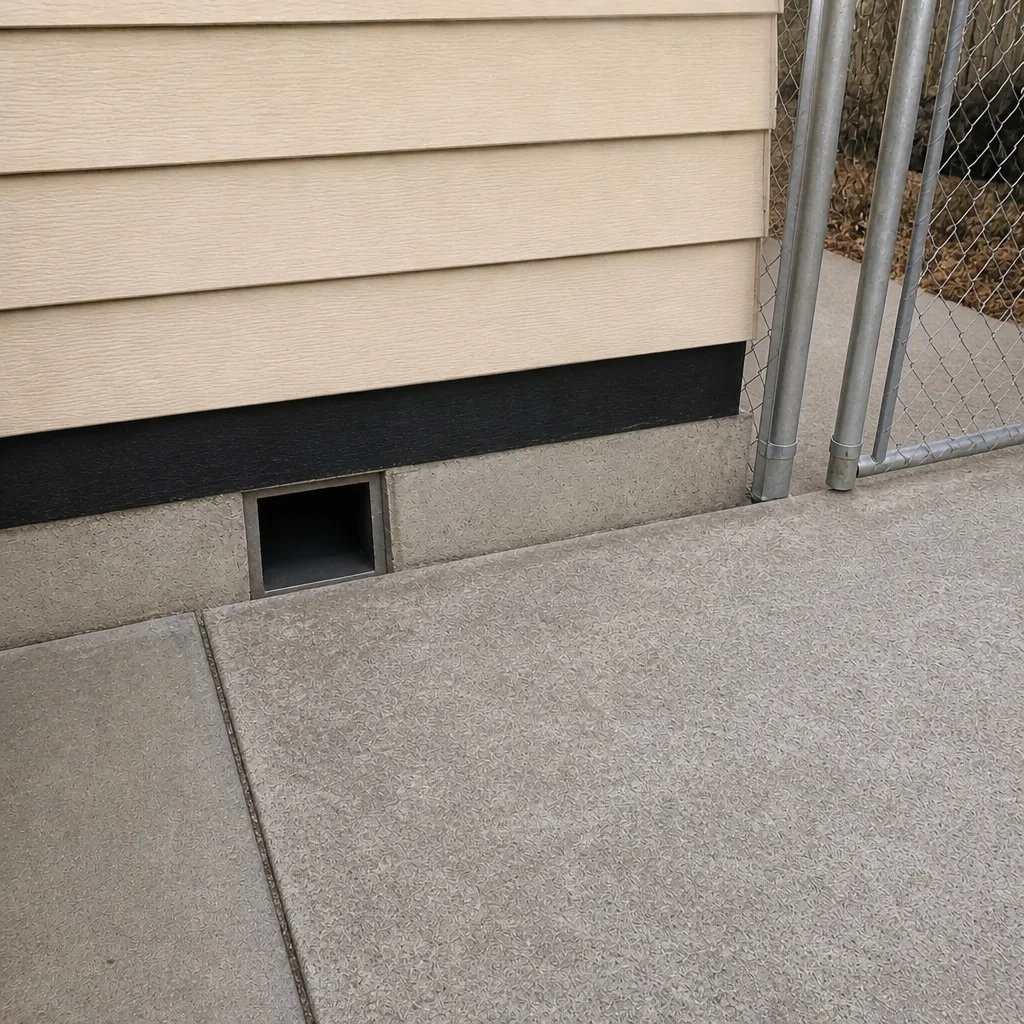 After
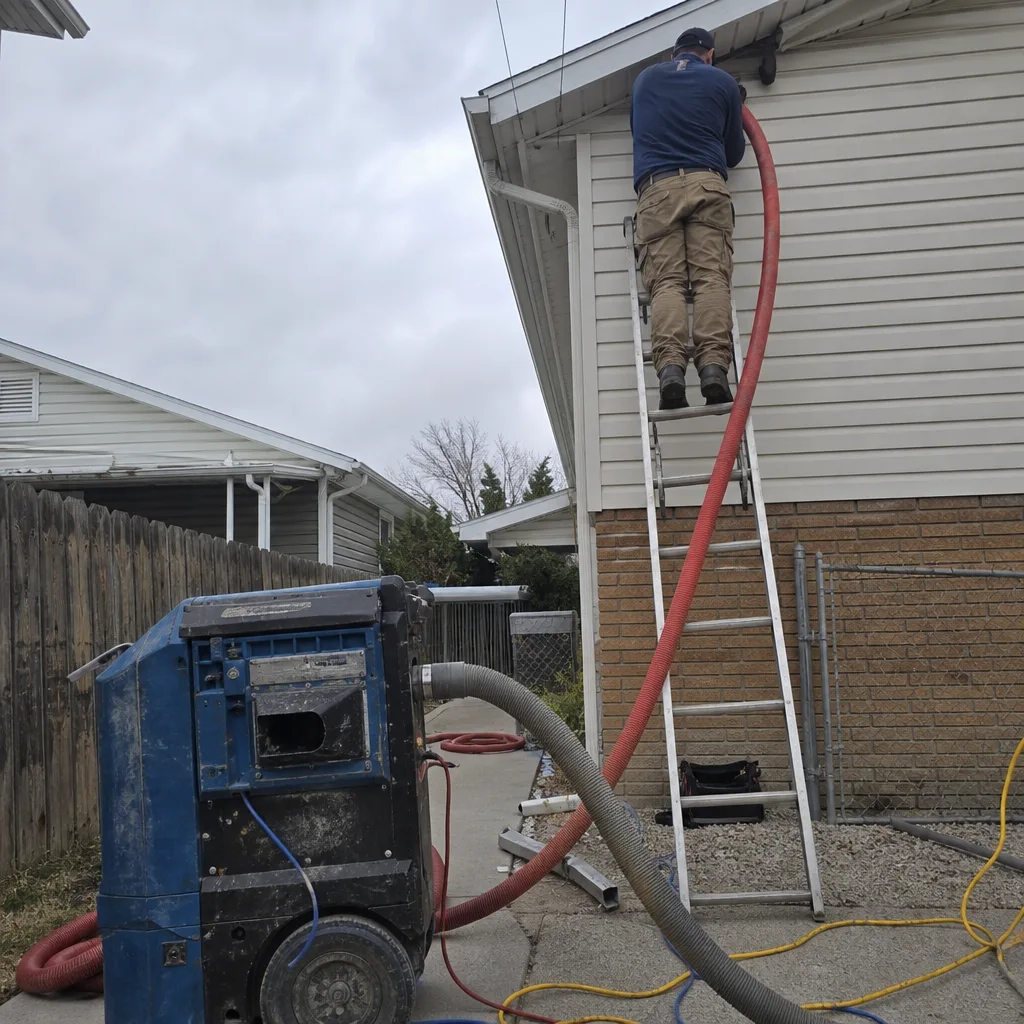 Before
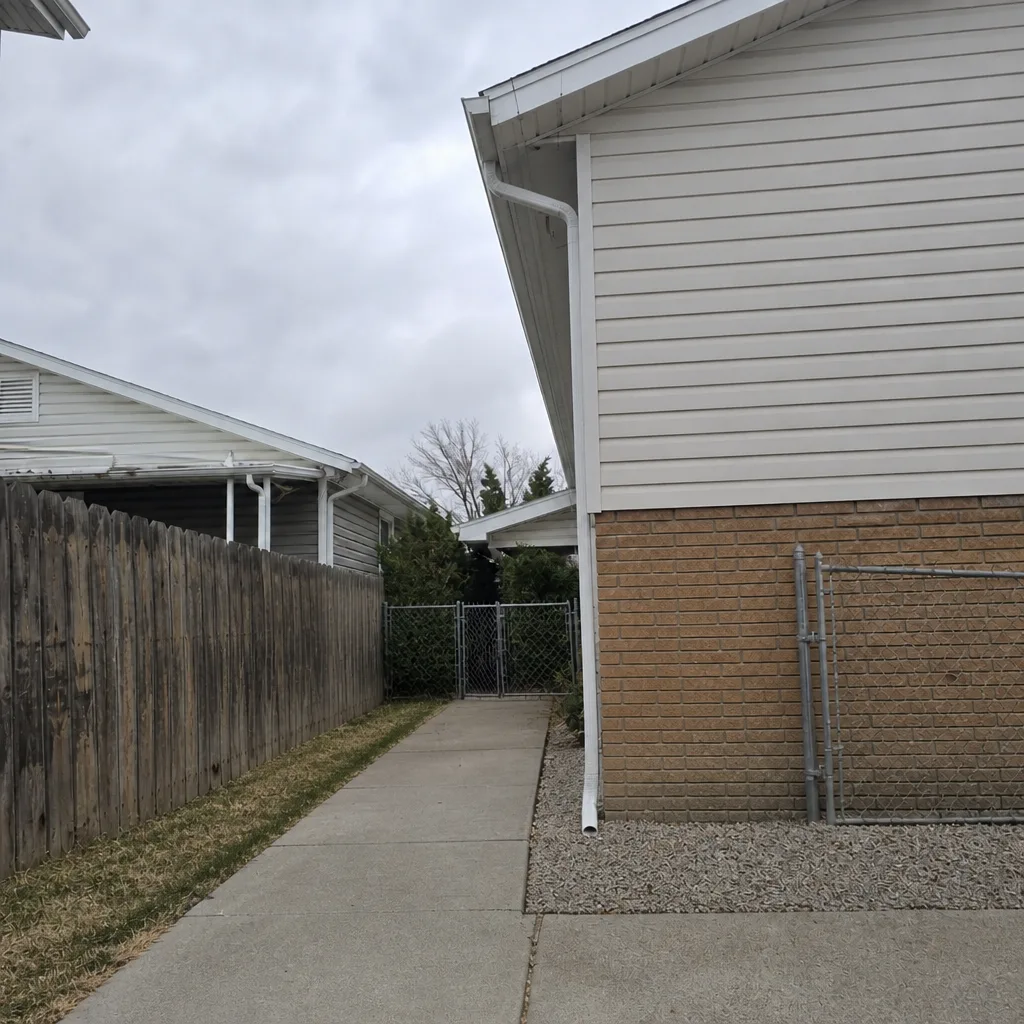 After
 Before
 After
When to Call a Professional
Some duct problems are safe to investigate yourself. Some aren’t, and a few are genuinely dangerous. Call a professional when:
- You suspect a disconnected or crushed run in a crawlspace or attic. Crawlspace air may contain moisture, insulation fibers, or pest debris, and moving through a tight space with the system running can distribute contaminants through the house.
- You see mold or suspect microbial growth inside a duct or on a coil. Touching suspected mold without containment spreads spores into living space; a professional uses negative-air containment and HEPA extraction so what’s loosened is captured, not redistributed.
- You’re working around the furnace or air handler. Gas line work and electrical panel work are both areas where the danger is real and not obvious. A trained technician should handle them.
- Your system has a collapsed flex run touching the blower compartment or any electrical component. Duct contact with the motor or wiring can be a fire concern.
- You’ve tried airflow tests and room temperature comparisons, and the pattern doesn’t clearly point to debris or leaks. That’s the point where a manometer reading settles the question.
Ogden Air Duct Cleaning Pros offers free estimates in Ogden. Call (844) 564-2864. We answer 24/7, and fast dispatch is available from 7am to 7pm.
Frequently Asked Questions
If every register feels weak and room temperatures stay even, the problem is likely debris buildup. If airflow is strong near the furnace and weak in far rooms, with those rooms running warm or cold, it’s more likely a leak or a collapsed run. The two have different fixes: cleaning for one, repair and reseal for the other. Call (844) 564-2864 for a free estimate and we’ll help you sort out which one you’re facing.
Because the sanitizing step was skipped. Mechanical cleaning removes debris but doesn’t kill mold or bacteria established on duct lining, coil, or drain pan. Once the system runs again, the growth returns. A proper job does Rotary brush agitation, HEPA extraction, and a Guardsman sanitizing treatment in that order. Call (844) 564-2864 to schedule a free estimate that includes the sanitizing step.
For an average Ogden home, typical pricing is $350-$700 for whole-home duct cleaning, $150-$400 for HVAC coil and air handler cleaning, and $75-$200 for post-clean sanitizing. These are typical ranges, and the written estimate sets the final price. Call (844) 564-2864 for an exact quote, and estimates are free.
Because a low quote usually means a brush pass without HEPA containment or sanitizing. Without negative-air containment, loosened debris gets blown back into the living space. Without the sanitizing step, the smell comes back. A cheap quote is often a partial job with the expensive steps removed. Call (844) 564-2864 for a free estimate that covers the full sequence.
Ask for before-and-after photos of your own ducts and boots. A legitimate provider takes them, and the photos should show the interior of the boots and the return trunk, not just the grille. Call (844) 564-2864 for a free estimate and we’ll walk you through exactly what the documentation will show.
It depends on the home, not a fixed timeline. Homes with pets, recent renovation, or a heavy mineral-dust history tend to need cleaning sooner than a low-particulate household. A visual inspection inside the return boot and supply registers tells you more than a calendar. Call (844) 564-2864 for a free estimate that includes an inspection, not a preset schedule.
Usually yes. A single crushed or disconnected run is typically repaired and resealed without touching the rest of the ductwork. The fix involves reconnecting or replacing that run and sealing the connections. Call (844) 564-2864 to schedule a free estimate and find out whether it’s a single-run repair or a larger job.
The Bottom Line
Most duct problems that get blamed on the HVAC equipment are diagnosable from the duct side: uniform weak airflow points to debris, temperature drift points to leaks, dead rooms point to a collapsed run, and returning musty smells point to a skipped sanitizing step. In Ogden, hard water mineral dust binds with desert particulate into a cake that plain brushing misses, so agitation and HEPA extraction have to be done in the right order, after a proper reseal. Get the diagnosis right and the fix tends to be simple. Get it wrong and you’ll keep paying to solve the same problem.
What Happens When You Call
When you call Ogden Air Duct Cleaning Pros, you reach a team that will walk through the symptoms with you before anyone quotes a job. We answer 24/7. Fast dispatch is from 7am to 7pm, Sunday through Friday, and we’re closed on Saturday. Every job gets a flat price per system agreed before work starts, before-and-after photos of your own ducts, and a process that runs from inspection through reconstruction in a single relationship. Call (844) 564-2864 for a free estimate. Better air starts with understanding what’s actually in your ducts.
Written by the team at Ogden Air Duct Cleaning Pros.